
MILEMETAL · AGRICULTURE
CNC Machining for Agricultural Equipment Parts
A replacement pin or a small mounting bracket can determine whether a machine is ready for work. MileMetal reviews custom CNC machined parts for agricultural equipment, from service components to new machine designs.

Make the part fit the machine and the way it is maintained
Agricultural equipment combines large structures with small interfaces that need to work consistently. A pin must fit its joint, a shaft must locate its mating component, and a sensor bracket must leave room for adjustment and protection. Those relationships matter more than the complexity of the part on its own.
For a new design, send the mating geometry and explain how the component is assembled. For a replacement, identify the machine revision and the intended dimensions rather than copying wear into a new part. Include quantities and timing early, particularly when a service requirement is tied to a planned maintenance window.
Separate the wear surface from the locating features
Pins, bushings and sleeves often combine several jobs in one shape. One surface locates the component, another moves against a mating part, and a groove or shoulder retains it. Mark these functions on the drawing so the material, finishing and inspection requirements can be applied where they belong.
If hardness or heat treatment is required, specify the material condition and the relevant acceptance criteria. A request for a “hard pin” leaves too much open. Include the finished dimensions and any grinding requirement, with the relationship between processing and final inspection made clear.
Lubrication passages and cross-holes also need a complete definition. State edge and burr requirements at the intersections, and show which features must remain accessible in the installed assembly. The goal is a service part that is both dimensionally correct and practical to use.

FROM THE MILEMETAL MEDIA LIBRARY
Part forms and the work behind them
These existing product and workshop photographs show relevant geometries and manufacturing activities. They are separate examples, rather than a single customer project.

Stepped shafts
A range of slender shafts with different stepped profiles.

Pins and shaft components
Small cylindrical parts arranged in matching groups.

Shaft with cross-holes
A stepped shaft example with threaded and cross-drilled features.

Shaft and slotted sleeve
A shaft-related component with an enlarged slotted section.
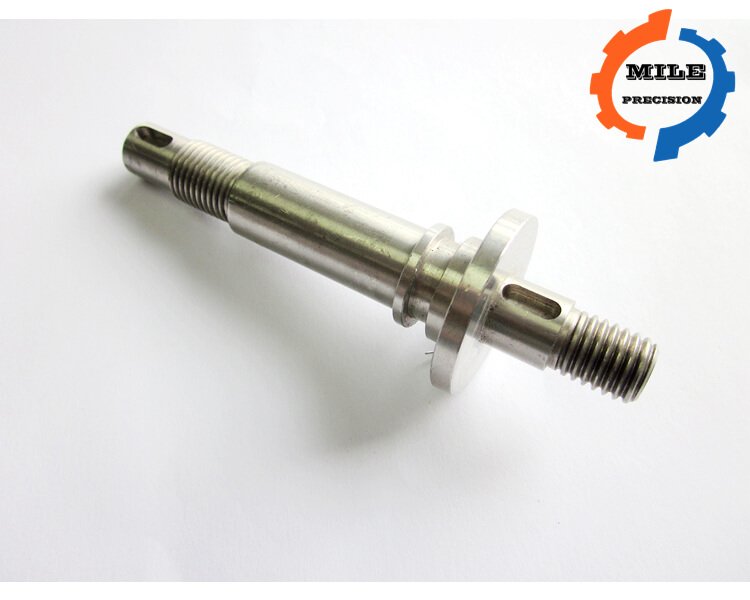
Threaded shaft example
An elongated shaft with a shoulder and threaded end.

Flanged sleeve
A sleeve component combining a central bore with mounting holes.
Where these components fit
Wear and service components
Pins, bushings, sleeves and shafts can be reviewed against approved dimensions and material conditions. Identify replaceable surfaces and the intended maintenance arrangement.
Machine structures and drives
Housings, adapters and mounting parts connect purchased components to the equipment frame. Include datums and mating interfaces to explain their function.
Sensors and accessories
Brackets, spacers and small enclosures support instrumentation and accessory installation. Adjustment, tool access and cable clearance should be visible in the design.

Locate the shaft and support the assembly
A bearing-related housing needs a clear relationship between its bore and its mounting surfaces. Define the datums around the way the housing seats on the machine. Include the mating component information when it governs the size or alignment of the bore.
For a replacement housing, check whether mounting damage, shims or field modifications have changed the installation. Record approved changes in the drawing rather than leaving them in separate notes. This prevents the new part from repeating an installation problem that was already known.
Where a housing includes a cover, seal or lubrication feature, show the complete interface. A simple section view can explain a shoulder or passage that is difficult to interpret from an exterior model.
Choosing the material and finish
Start with the required function and service conditions. A wear component, a structural mount and a sensor support may call for different materials and processing. If the part needs heat treatment or a protective finish, include that in the first request rather than adding it after machining has been quoted.
| Material to discuss | Typical component enquiry | Details to include |
|---|---|---|
| Alloy steel, specified grade | Pins, shafts and loaded mechanical parts | State heat treatment, hardness requirements and finished dimensions. |
| Carbon steel, specified grade | Brackets, flanges and selected supports | Include coating, edge condition and critical mounting features. |
| Stainless steel, specified grade | Selected exposed hardware and shafts | Define the environment, material condition and mating requirements. |
| Aluminum or engineering polymer | Sensor supports, covers and selected guides | Specify the grade and the load, exposure and finish requirements. |
Material availability and process scope are confirmed against your drawing and quotation. Include any restrictions on substitutions or approved sources.
The drawing details worth resolving early
Use the component’s function to decide what needs close control. The following details give the machining and inspection review a useful starting point.
| Feature | What to define | Why it helps |
|---|---|---|
| Pin diameter | Finished limits and functional length | Defines the contact region instead of only the overall size. |
| Bushing interface | Mating fit, shoulder and retention details | Clarifies installation and replacement. |
| Heat-treated feature | Material condition, hardness and final sizing | Aligns machining and secondary processing. |
| Housing bore | Position relative to mounting datums | Relates the shaft interface to the machine frame. |
| Adjustment slot | Travel, end geometry and fastener clearance | Makes the intended setup movement clear. |
Small brackets deserve a look at the surrounding machine
Sensors, guards and cable supports may need adjustment during setup. Show the direction of adjustment and the clearance around the fastener, not just the slot length. Make sure a tool can still reach the fastening point once the bracket is installed.
If the part operates near moving equipment or exposed material, provide the envelope and protection requirements established by the machine designer. Define edge condition, coating and any surfaces that need to remain free of treatment for assembly.
When a prototype is evaluated on the machine, record the final position and any geometry changes before ordering a batch. A short, controlled revision is more useful than asking production to reproduce an informal workshop alteration.

Inspection that follows the function of the part
Use the inspection plan to distinguish wear surfaces, locating surfaces and clearance features. After any specified heat treatment or coating, verify the dimensions that govern assembly in their required final condition.
For repeated service orders, keep part numbers and revisions linked to the corresponding equipment. Agree on identification, protective packaging and any material or processing records needed by your maintenance team.
Put numbers where they help the drawing
Clear callouts are easier to quote and inspect than a general request for “high precision.” The examples below show the format of a requirement, not recommended design values or a guarantee of machining capability.
| Characteristic | Illustrative format | Complete the definition |
|---|---|---|
| Critical size | 25.00 ±0.05 mm | Identify the feature and the condition in which it is accepted. |
| Surface texture | Ra 1.6 μm on a marked face | Define the area and any measurement requirements. |
| Flatness | 0.05 mm over a designated face | State the support condition and whether acceptance follows finishing. |
| Thread | Full designation, class and usable depth | Include blind-hole clearance and the required finished condition. |
Where the design depends on a purchased bearing, connector, motor or other mating part, include that interface information. It is usually more useful than tightening unrelated dimensions across the entire component.
A straightforward way to start
Send a STEP model and a dimensioned drawing with the material, finish, quantity and delivery needs. Add an assembly view when it explains a fit or an access constraint. We can then review the component and identify the open details needed for a quotation.
Before production, agree on the released revision, any secondary operations and the inspection records to be supplied. After a first build, keep approved changes in the same controlled file set. This gives the next order a clear starting point instead of a trail of disconnected notes.
Questions before your first order
Can you quote replacement agricultural machine parts?
Send the approved drawing, quantity, material and processing requirements. Add photographs and equipment context when they help explain the fit or installation.
Is a worn sample enough for production?
A worn sample can help establish geometry, but intended sizes and fits need approval. Agree on a controlled drawing before making replacements.
Can pins be heat treated or ground?
Include the grade, hardness requirements, finished dimensions and specified processes. The scope and acceptance criteria will be confirmed during quotation.
What matters for a bearing housing?
Define the bore, its relationship to mounting datums and the required mating fit. Include shoulders, seals and lubrication features where present.
Can a sensor bracket include adjustment slots?
Yes. Provide the slot geometry, adjustment direction, mounting hardware and available tool clearance.
How should I plan a repeat service order?
Reference the released part number and revision, confirm quantity and timing, and identify any changes to the installed equipment.
START A CONVERSATION
Let’s discuss your agriculture components
Share your drawing package and tell us which parts you need first. Include the features that matter to the assembly so the quotation can address the work you actually need.