CNC Plastic Machining Material Selection Guide: POM, Nylon, PTFE, Acrylic and PEEK
2026-06-07
Stainless Steel Grades Types and Machining Guide for CNC Parts
2026-06-08
Stiffness of Metal Material Chart: Young’s Modulus, Specific Stiffness and CNC Material Selection
Stiffness is the material property that tells you how much a part resists elastic deformation. This guide compares common metals by Young’s modulus, explains stiffness vs strength, and shows how to use stiffness data when designing CNC machined parts.
What Is Metal Stiffness?
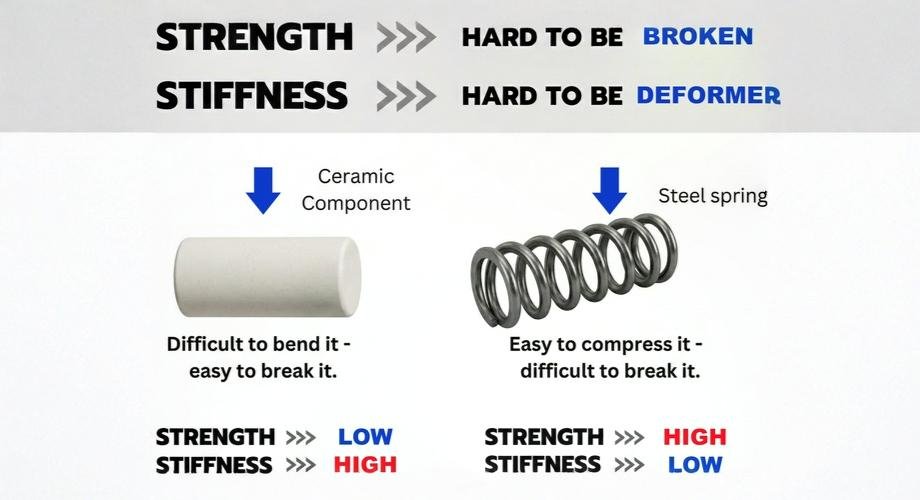
Metal stiffness is the resistance of a material to elastic deformation under load. In engineering design, stiffness is usually represented by Young’s modulus, also called the modulus of elasticity. A higher Young’s modulus means the material stretches, bends or compresses less under the same load and geometry.
Stiffness is not the same as strength. Strength tells you how much stress a material can take before yielding or breaking. Stiffness tells you how much it deflects before that happens. A part can be very strong but still flexible, or relatively low-strength but stiff enough if the geometry is correct.
Controls elastic deflection, vibration and positional stability.
Controls yielding, permanent deformation and fracture risk.
Section thickness, ribs, span length and shape can change part stiffness dramatically.
Why Stiffness Matters in CNC Machined Parts
For brackets, shafts, housings, fixtures, manifolds and precision assemblies, stiffness can be just as important as tensile strength. Excessive deflection can cause misalignment, chatter, leakage, seal failure, bearing wear or inaccurate assembly. When a part must hold position under load, Young’s modulus and geometry should be reviewed early.
- Long spans: Low stiffness can produce bending even when the part is not close to yielding.
- Thin walls: Aluminum and copper parts may need ribs or thicker sections to match steel stiffness.
- Precision fits: Deflection can change hole alignment, shaft support and sealing pressure.
- Vibration: Machine frames, arms and fixtures need enough stiffness to reduce resonance and chatter.
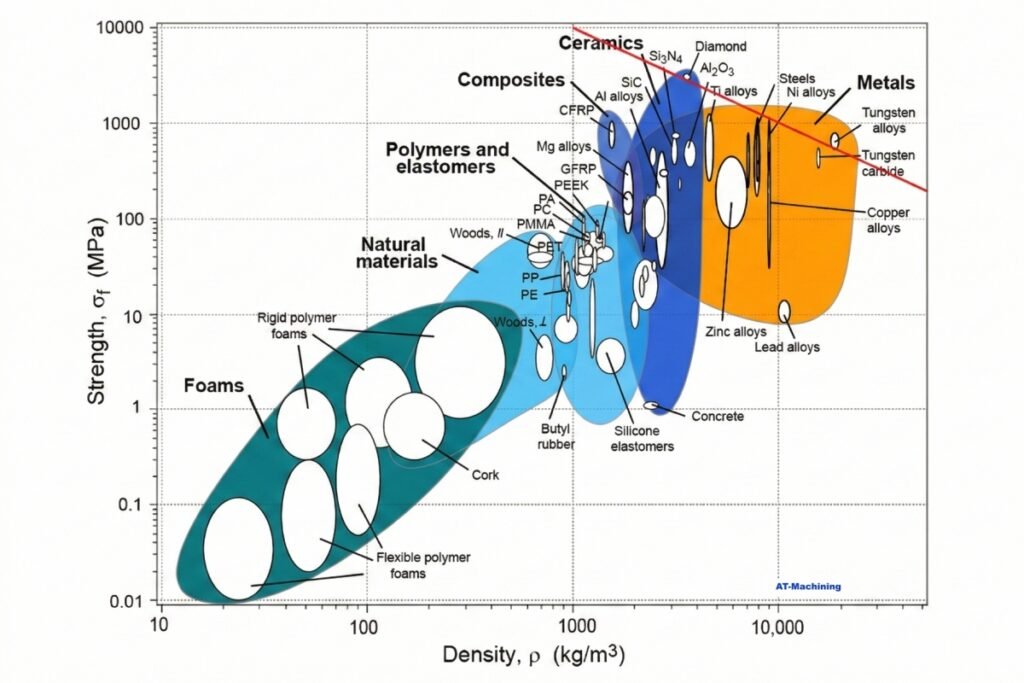
Stiffness of Metal Material Chart
The chart below compares typical Young’s modulus values for commonly machined metals. Values vary by alloy, temper, heat treatment and product form, so use this as an engineering selection guide rather than a final material certificate.
| Metal material | Typical Young’s modulus | Density | Relative stiffness impression | Common CNC machining uses | Design notes |
|---|---|---|---|---|---|
| Carbon steel | 200-210 GPa | 7.85 g/cm³ | Very high | Shafts, fixtures, frames, high-load brackets | Good stiffness and strength, but heavier than aluminum or titanium. |
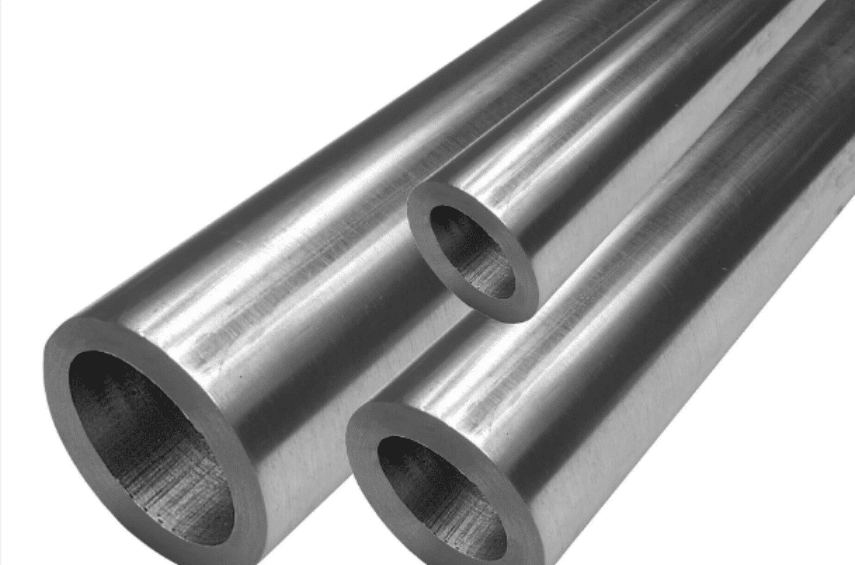
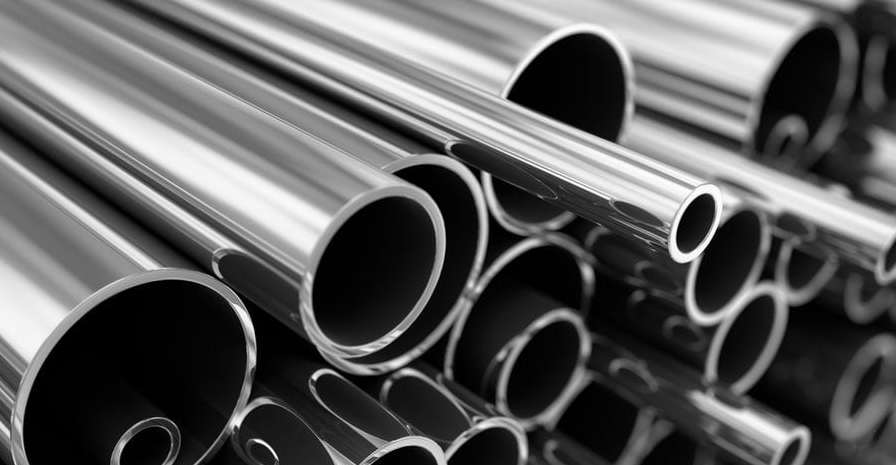
| Stainless steel 304 / 316 | 190-200 GPa | 7.9-8.0 g/cm³ | Very high | Manifolds, medical parts, corrosion-resistant hardware | Similar stiffness to steel with better corrosion resistance, but more difficult to machine. |
| Tool steel | 200-215 GPa | 7.7-8.1 g/cm³ | Very high | Dies, wear plates, gauges, tooling components | Excellent stiffness and wear performance after proper heat treatment. |
| Titanium Grade 5 | 110-115 GPa | 4.43 g/cm³ | Medium-high | Aerospace brackets, medical parts, high-performance components | Lower modulus than steel, but strong and lightweight with good specific stiffness. |
| Aluminum 6061 / 7075 | 68-72 GPa | 2.7-2.8 g/cm³ | Medium | Housings, plates, prototypes, lightweight machine parts | About one-third the stiffness of steel, so geometry often needs thicker sections or ribs. |
| Brass | 95-110 GPa | 8.4-8.7 g/cm³ | Medium | Gears, fittings, bushings, electrical and decorative parts | Machines well and is stiffer than aluminum, but density is high. |
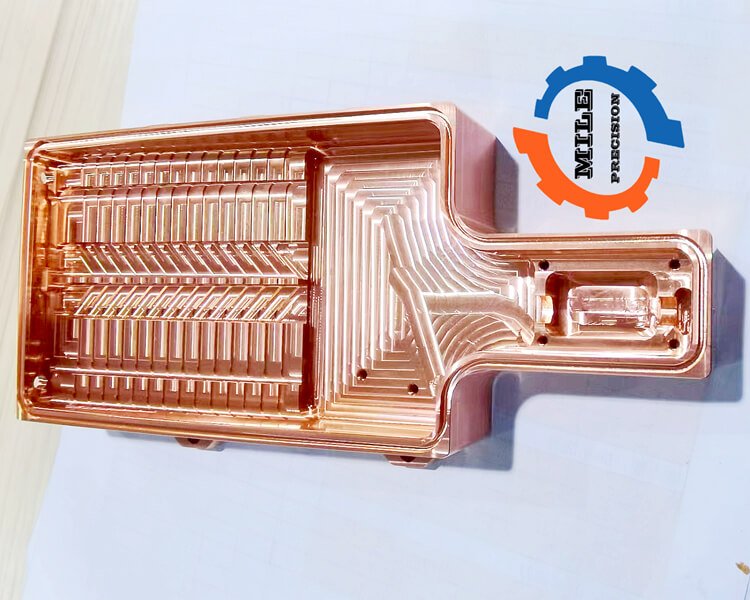
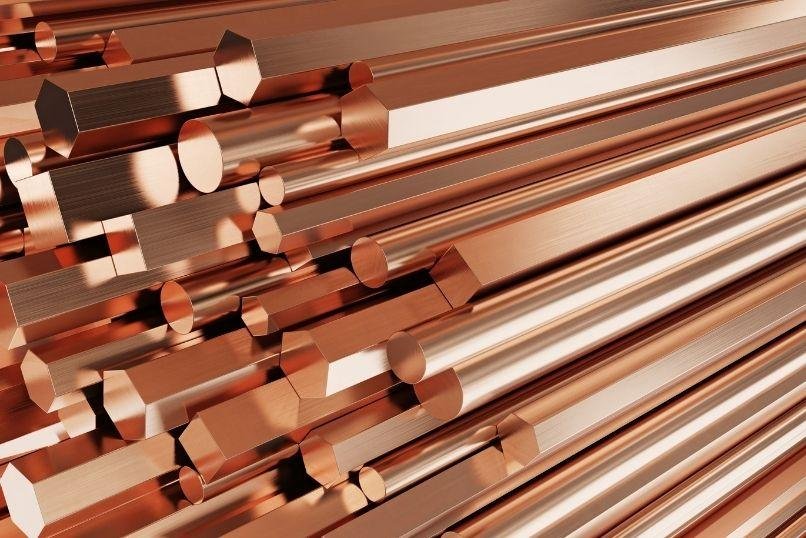
| Copper | 110-130 GPa | 8.9 g/cm³ | Medium-high | Electrical contacts, heat sinks, bus bars, conductive parts | Good modulus and conductivity, but soft copper can be challenging to machine cleanly. |
| Magnesium alloy | 40-45 GPa | 1.7-1.9 g/cm³ | Low-medium | Lightweight housings and aerospace components | Very light, but lower modulus requires careful section design and machining safety controls. |
| Zinc alloy | 80-100 GPa | 6.6-7.1 g/cm³ | Medium | Die-cast and machined hardware | Moderate stiffness with good castability, less common for high-performance CNC parts. |
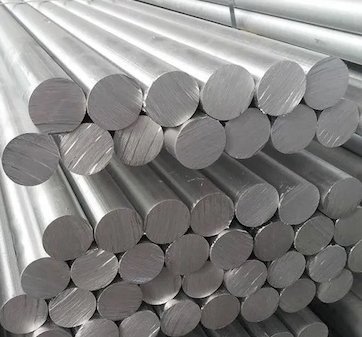
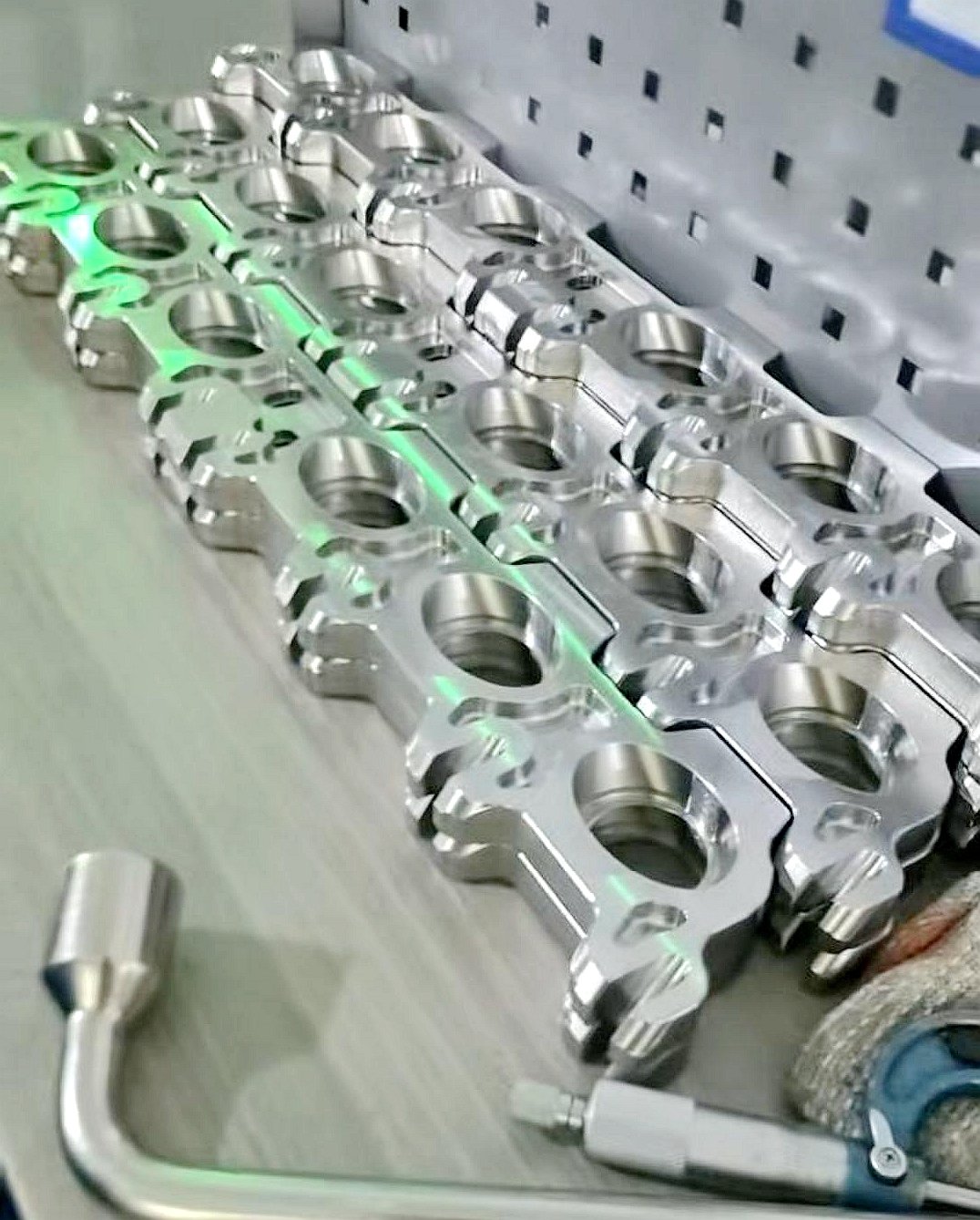
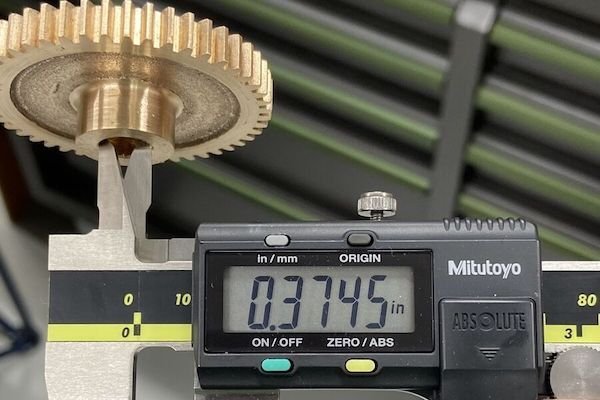
Specific Stiffness: Stiffness Compared with Weight
Specific stiffness compares Young’s modulus with density. It helps designers choose a material when both rigidity and weight matter. Steel has a high modulus, but it is dense. Aluminum has a lower modulus, but it is much lighter. Titanium sits between them and is attractive when strength, corrosion resistance and weight reduction matter.
| Material | Young’s modulus | Density | Specific stiffness impression | What it means in design |
|---|---|---|---|---|
| Steel / stainless steel | Very high | High | Good | Excellent rigidity, but heavy. Best when weight is less important. |
| Aluminum | Medium | Low | Good | Often efficient for lightweight structures if section size can increase. |
| Titanium | Medium-high | Medium | Good to very good | Useful for high-value lightweight parts, but machining cost is higher. |
| Brass / copper | Medium to medium-high | High | Lower | Chosen more for machinability, conductivity, wear or corrosion than weight efficiency. |
| Magnesium | Low-medium | Very low | Good | Useful for lightweight parts, but modulus is low and machining safety must be controlled. |
If two materials have similar specific stiffness, the final stiffness of the part may be controlled more by geometry than by material. Increasing wall height, adding ribs, shortening span length or changing cross-section can improve stiffness without simply choosing a heavier metal.
How to Improve Part Stiffness Without Overweighting the Design
Increase section height
For beams and brackets, stiffness improves quickly when section height increases.
Add ribs or gussets
Ribs help thin aluminum or magnesium parts resist bending without becoming solid blocks.
Shorten unsupported spans
Long spans deflect easily. Add supports or change mounting points where possible.
Control machining stress
Thin-walled parts may move after machining, so process sequence and fixturing matter.
Choosing Metals for Stiff CNC Machined Parts
| Design goal | Good material candidates | Why | Watch-outs |
|---|---|---|---|
| Maximum rigidity | Carbon steel, stainless steel, tool steel | Highest Young’s modulus among common machined metals | Weight, corrosion, machining time and finishing |
| Lightweight stiffness | Aluminum 6061/7075, titanium | Good stiffness-to-weight performance | Aluminum needs larger section size; titanium costs more to machine |
| Conductive stiff parts | Copper, brass | Electrical/thermal conductivity with moderate stiffness | High density and material-specific cutting behavior |
| Corrosion-resistant rigidity | Stainless steel 304/316, titanium | Good modulus with corrosion resistance | Tool wear, heat control and cost |
| Precision fixtures | Steel, aluminum, stainless steel | Depends on load, weight and shop handling needs | Thermal expansion and local deflection under clamping |
FAQ: Metal Stiffness and Material Selection
What metal has the highest stiffness?
Among common CNC machined metals, steel and tool steel have some of the highest Young’s modulus values, typically around 200-215 GPa. Tungsten is stiffer, but it is less common for general CNC machining.
Is aluminum weaker or less stiff than steel?
Aluminum is much less stiff than steel by modulus, roughly one-third of steel. It can still be a good choice when low weight matters and the part geometry can be designed with thicker sections, ribs or shorter spans.
Does heat treatment increase stiffness?
Heat treatment can greatly change strength and hardness, but it usually changes Young’s modulus only slightly. If a part needs less deflection, geometry and material family usually matter more than heat treatment.
Is stiffness the same as hardness?
No. Hardness describes resistance to indentation, scratching or wear. Stiffness describes elastic deformation under load. A material can be hard but not especially stiff, or stiff but not very hard.
Need help choosing a metal for a stiff CNC part?
Send your drawing, 3D model, load condition and weight target. Milemetal can review material options, geometry risks, tolerances and machining strategy before production.