CNC Machining Size Limitations: Work Envelope and Design Guide
2026-06-18
CAD File Formats for CNC Machining: STEP, IGES, STL, DXF and Drawings
2026-06-18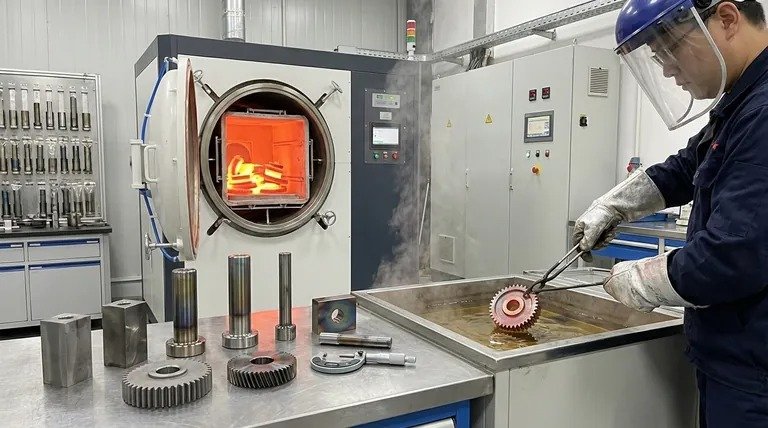
Steel Hardening Guide: Heat Treatment, Case Hardening, Hardness and Design Tips
Steel hardening improves wear resistance, fatigue performance and service life by changing the steel microstructure or by creating a hard surface layer. For CNC machined parts, the best result comes from choosing the correct steel grade, heat treatment method, hardness target, case depth, machining allowance and inspection plan before production starts.
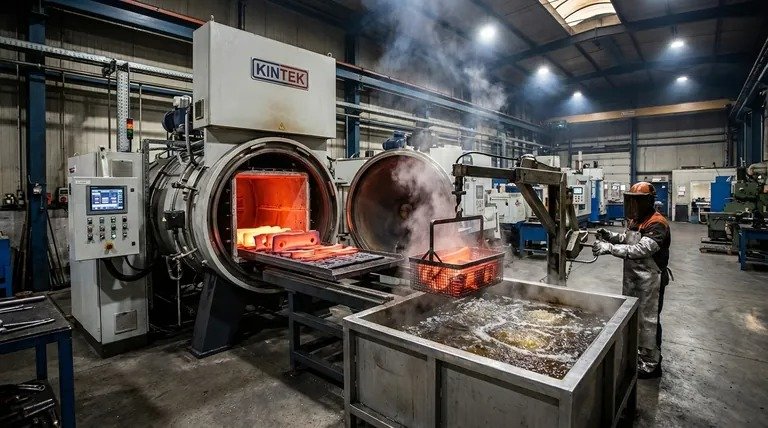
What Is Steel Hardening?
Steel hardening is a heat treatment or surface treatment process that increases resistance to indentation, wear and plastic deformation. In many carbon and alloy steels, the basic sequence is to heat the steel into the austenite range, hold it long enough for the section to transform, then cool it fast enough to form martensite. Because fresh martensite is hard but brittle, the part is normally tempered afterward to reduce stress and adjust final toughness.
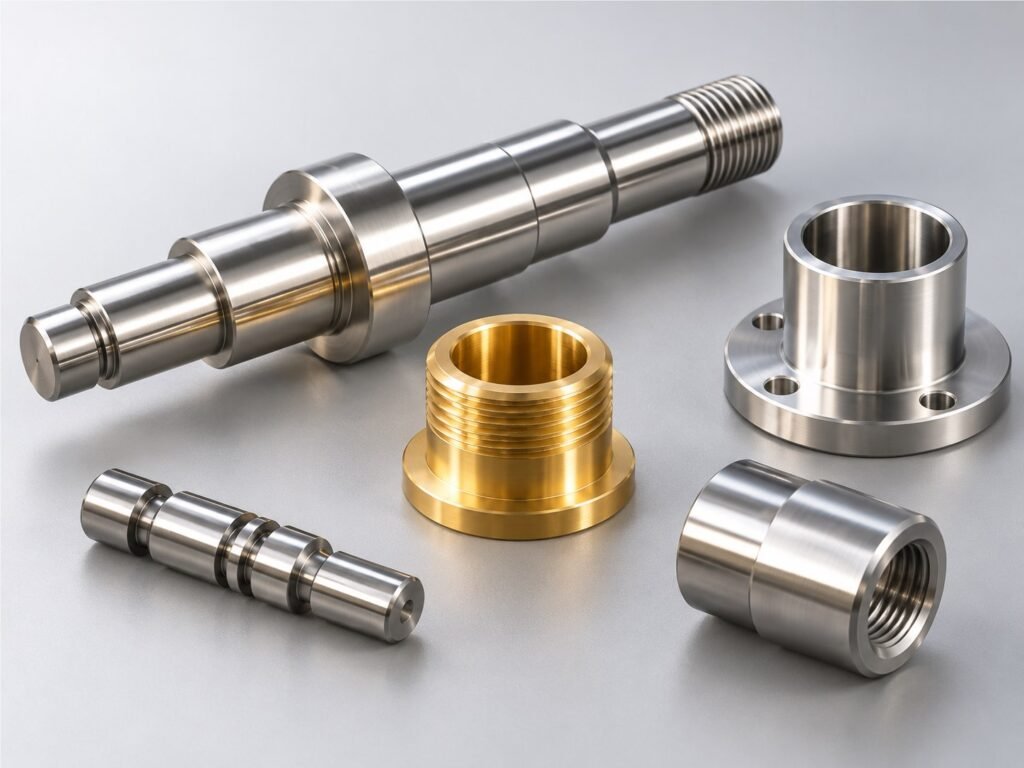
For parts such as shafts, bushings, pins, gears, sliding blocks, tooling plates and wear sleeves, hardening can be more important than the initial machining tolerance. The final design must consider distortion, grinding stock, threaded features, surface finish, case depth and the hardness test location.
Why Carbon, Alloy Content and Section Size Matter
Carbon is the primary element that allows steel to form high-hardness martensite. Low-carbon steels may need carburizing or carbonitriding if a hard surface is required. Medium-carbon and alloy steels such as 1045 or 4140 can be through hardened more easily. Tool steels and bearing steels can reach very high hardness, but they require controlled heat treatment and careful distortion management.
Higher carbon generally increases achievable hardness, but also increases brittleness and crack sensitivity.
Chromium, molybdenum, nickel, vanadium and manganese can improve hardenability, wear resistance and tempering response.
Thin sections cool faster than thick sections, so the same steel can harden differently across complex geometry.
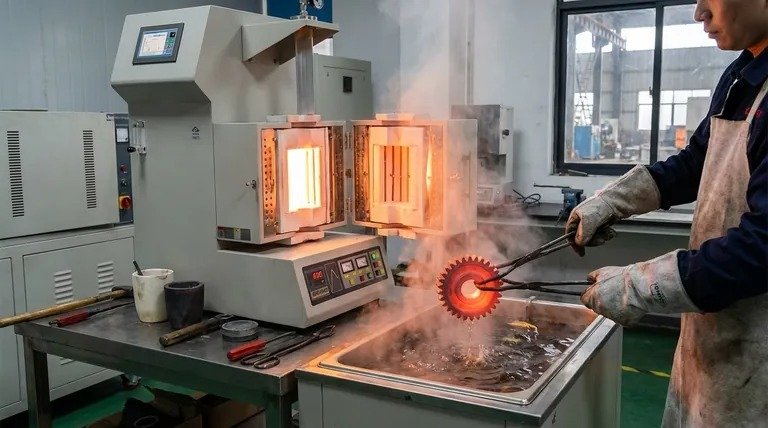
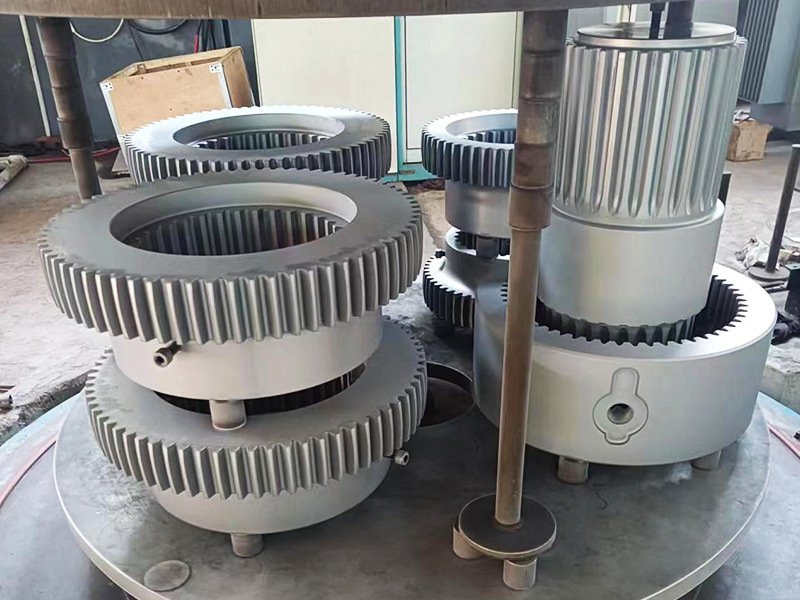
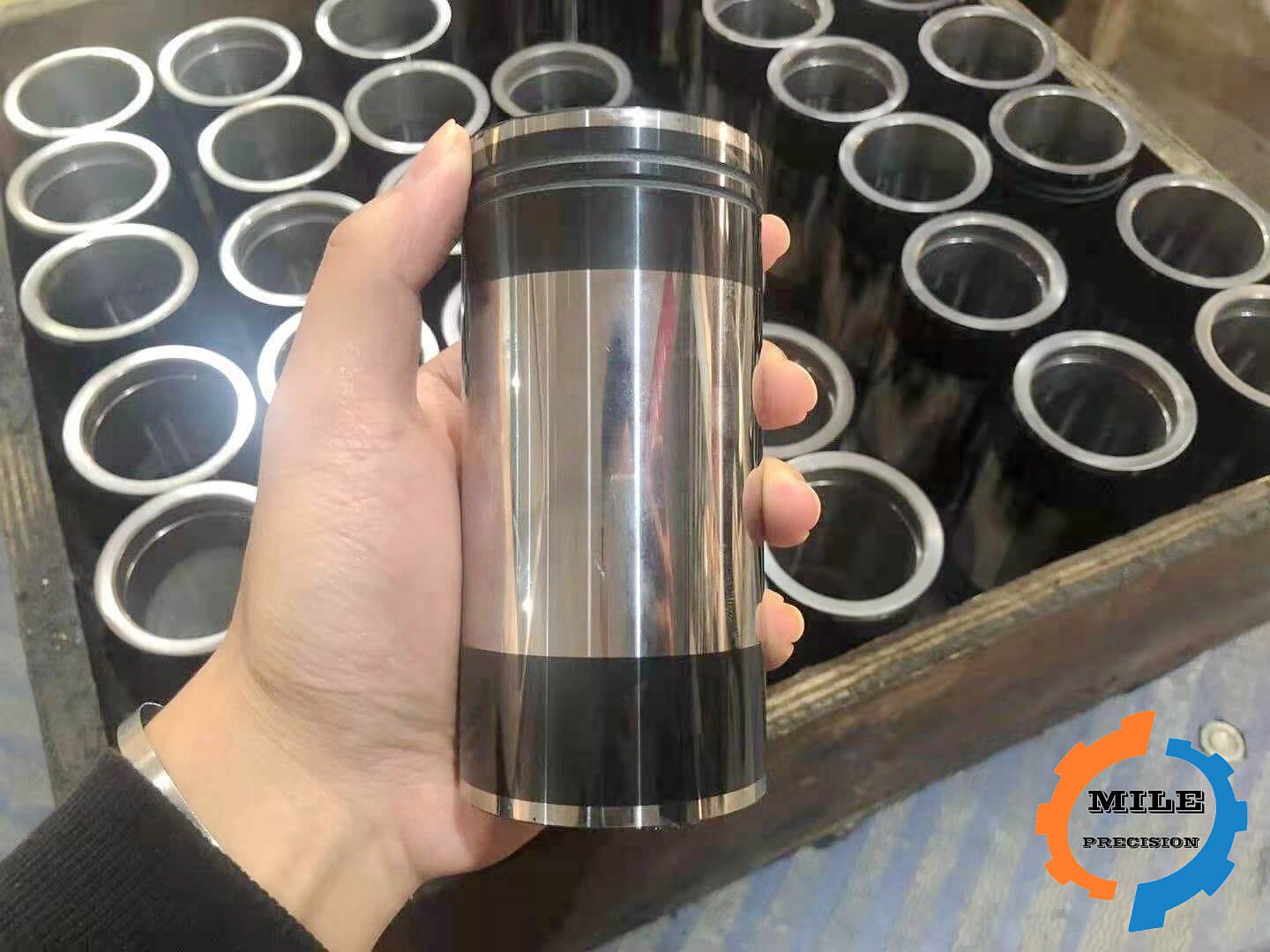

Steel Hardening Process Comparison
Different hardening methods solve different engineering problems. A shaft may need a hard outside and tough core, while a fixture plate may need stable through hardness. The table below compares common choices for machined steel parts.
| Process | How it works | Typical result | Best for | Main risk |
|---|---|---|---|---|
| Quench and temper | Austenitize, quench, then temper to final hardness | Through hardness with improved toughness after tempering | 1045, 4140, 4340, tool steel components, shafts and blocks | Distortion, cracking, decarburization and section hardness variation |
| Carburizing / case hardening | Diffuse carbon into a low-carbon steel surface, then quench | Hard wear-resistant case with tougher core | Gears, cams, bushings, pins and wear surfaces | Case depth control, growth and post-grind allowance |
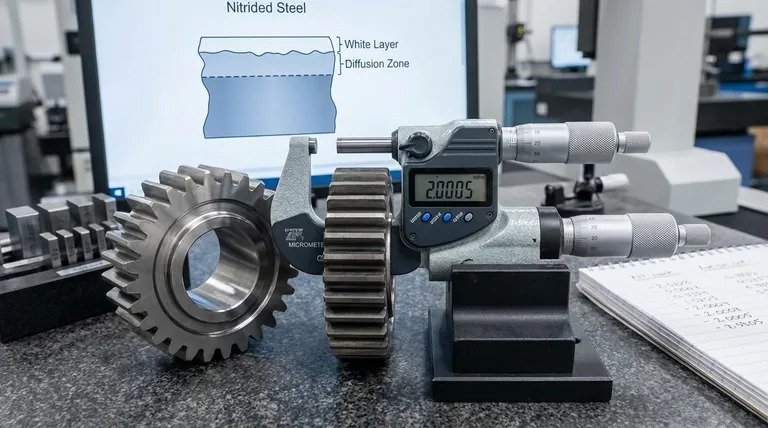
| Nitriding | Diffuse nitrogen into alloy steel at lower temperature | Very hard case with low distortion | Precision shafts, molds, dies, gears and sliding surfaces | Long cycle time and material compatibility |
| Induction hardening | Heat selected surface areas with induction coil, then quench | Localized hardened zones | Bearing seats, splines, teeth, journals and wear tracks | Transition zone control and coil access limitations |
| Flame hardening | Heat surface with flame and quench locally | Localized surface hardening on larger parts | Large gears, rails, ways and heavy components | Less precise heating than induction |
| Precipitation hardening | Age harden suitable stainless or alloy grades | Strength increase with controlled temperature aging | 17-4 PH stainless and some specialty alloys | Grade-dependent response and condition control |
Steel Grade, Temperature and Hardness Planning Table
The following values are practical planning ranges for quoting and early design. Final temperature, soak time, quench medium, tempering condition and hardness acceptance criteria should be confirmed with the heat treater, material certificate and drawing specification.
| Steel grade | Common hardening method | Typical heating / treatment range | Typical final hardness | Common CNC part use |
|---|---|---|---|---|
| 1045 / C45 | Quench and temper, induction hardening | About 820-860 C before quench | Approx. 45-58 HRC depending section and temper | Shafts, pins, rollers and general wear parts |
| 4140 / 42CrMo4 | Quench and temper, induction hardening, nitriding after Q&T | About 830-870 C before quench | Approx. 28-55 HRC depending tempering target | High-strength shafts, fixtures, couplings and tooling parts |
| 8620 / 20CrNiMo | Carburizing, quench and temper | Carburizing often around 900-950 C | Case around 58-62 HRC with tough core | Gears, splines, cams and wear-resistant transmission parts |
| 52100 / bearing steel | Through hardening | Often around 830-860 C before oil quench | Approx. 60-64 HRC | Bearings, rollers, wear sleeves and precision contact parts |
| D2 tool steel | Air / controlled quench and temper | Often around 1010-1040 C before hardening | Approx. 58-62 HRC | Dies, punches, wear plates and tooling inserts |
| 17-4 PH stainless | Precipitation hardening / aging | Age hardening commonly around 480-620 C | Approx. 28-44 HRC depending condition | Corrosion-resistant high-strength machined components |
Approximate Hardness Conversion for Drawing Review
Rockwell, Vickers and Brinell values are not perfectly interchangeable because test method, load, material and microstructure matter. The table is useful for early communication only; production acceptance should use the hardness scale specified on the drawing.
| Rockwell C | Approx. Vickers HV | Approx. Brinell HB | Typical meaning |
|---|---|---|---|
| 28-32 HRC | 285-315 HV | 270-300 HB | Moderate strength, easier final machining than very hard steel |
| 38-42 HRC | 370-410 HV | 350-390 HB | Good balance of wear resistance and toughness |
| 48-52 HRC | 485-545 HV | 455-510 HB | High wear resistance, finishing usually needs grinding or hard machining |
| 58-62 HRC | 650-750 HV | Usually not measured by HB for many hardened parts | Very hard case, bearing steel or tool steel range |
Case Depth Reference for Surface Hardened Parts
Case depth should be specified with both hardness and measurement method. For example, a gear drawing may require effective case depth at a defined hardness threshold, while a sliding pin may only need a shallow wear-resistant layer.
| Case depth range | Typical use | Suitable process | Design note |
|---|---|---|---|
| 0.10-0.30 mm | Light wear protection and small precision components | Nitriding, carbonitriding, shallow induction | Good when distortion must stay low |
| 0.30-0.80 mm | Pins, bushings, splines and medium wear surfaces | Carburizing, induction, nitriding depending material | Leave finishing allowance if size is tight |
| 0.80-1.50 mm | Gears, cams and heavily loaded sliding surfaces | Carburizing and induction hardening | Review core strength and possible growth |
| 1.50-2.50 mm+ | Heavy-duty gears, large shafts and severe contact applications | Deep carburizing or specialized induction | Requires stronger process control and longer cycle time |
Distortion Risk Chart by Hardening Method
Distortion is one of the main reasons hardened steel parts fail inspection. The risk depends on material, geometry, quench severity, residual stress, wall thickness, holes, slots and heat treatment fixturing.
Design Tips for Hardened Steel CNC Parts
Specify the target clearly
Call out hardness scale, range, test location and whether hardness is surface-only or through hardness.
Add finishing allowance
Use grinding or hard-turning allowance when tight tolerance, flatness, runout or sealing surfaces matter.
Avoid sharp transitions
Use radii and balanced wall thickness to reduce quench cracking and local stress concentration.
Protect critical features
Threads, bores and sealing faces may need masking, copper plating or post-treatment finishing.
- State material grade and heat treatment condition on the drawing, such as 4140 Q&T 32-36 HRC.
- Use case depth requirements for parts that need a hard outside and tough core.
- Place hardness test points away from cosmetic or sealing surfaces when possible.
- Plan stress relieving before finish machining for large, welded or heavily roughed parts.
- Discuss straightness, flatness and runout after hardening, not only as-machined size.
Inspection and Quality Control After Hardening
Heat treatment should be verified with both hardness inspection and dimensional inspection. For surface hardening, microhardness traverse testing can confirm effective case depth. For precision parts, CMM inspection, runout checks, flatness checks, thread gauges and visual inspection for oxidation, cracks or decarburization may also be needed.
| Inspection item | Why it matters | Common method |
|---|---|---|
| Surface hardness | Confirms wear resistance and heat treatment response | Rockwell C, Vickers, microhardness |
| Core hardness | Confirms strength and toughness below the surface | Section test, Rockwell, Vickers |
| Case depth | Confirms hardened layer is deep enough for service load | Microhardness traverse or metallographic section |
| Dimensional change | Hardening can grow, shrink, bend or twist precision parts | CMM, gauges, runout and flatness checks |
| Surface defects | Cracks, scale and decarb can reduce service life | Visual inspection, magnetic particle inspection, surface finish check |
When Should Hardened Steel Be Chosen?
Hardened steel is often the right choice when a part must resist abrasion, rolling contact, sliding wear, impact or repeated load. However, it is not always the lowest-cost choice. If corrosion is the main requirement, stainless steel or plating may be better. If weight is critical, aluminum or titanium may be better. If friction is low and load is moderate, bronze or engineering plastic may solve the problem with less post-processing.
For the best manufacturing result, decide the heat treatment target together with material selection, machining sequence and final inspection. Milemetal can review drawings for steel grade, hardness requirement, surface hardening, grinding allowance and CNC machining feasibility before production.
Need Hardened Steel CNC Parts?
Send your drawing, material requirement and hardness target. We can help review machinability, heat treatment sequence, finishing allowance and inspection requirements.