
CNC Machining Tolerances Explained: ISO 2768-mK, H7/g6 Fits and Practical Tables
2026-06-07
Stiffness of Metal Material Chart: Youngs Modulus and CNC Material Selection
2026-06-08
CNC Plastic Machining Material Selection Guide: POM, Nylon, PTFE, Acrylic, PE, PP and PEEK
Choosing the right plastic is the first step toward a stable machined part. This guide explains how common engineering plastics behave during CNC milling and turning, when to choose PEEK, and what design details help plastic parts hold tolerance.
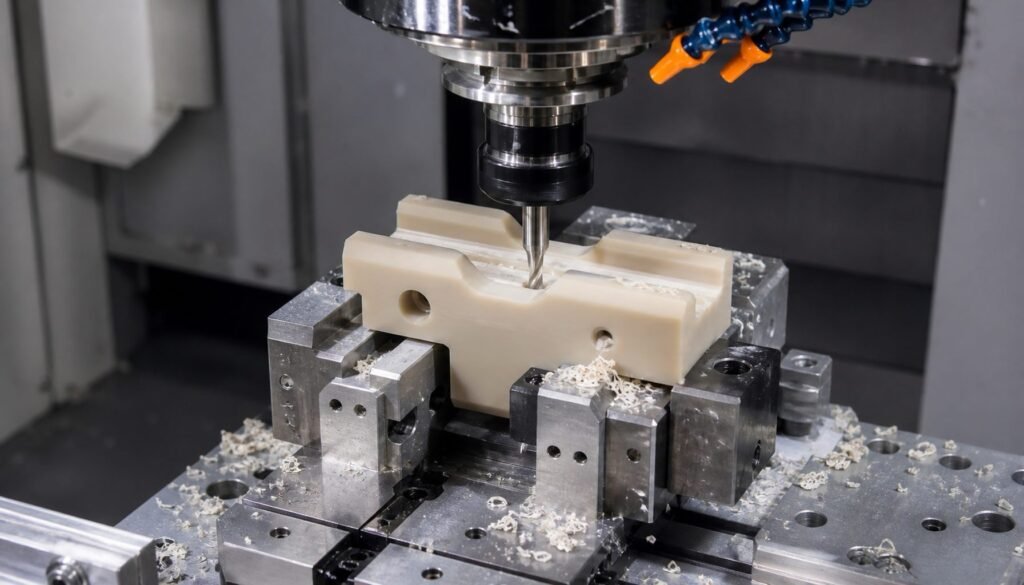
Why Use CNC Machining for Plastic Parts?
CNC plastic machining removes material from sheet, rod, tube or block stock to create precise functional parts. It is often faster and more flexible than injection molding when the part volume is low, the design is still changing, or the material is difficult to mold. Unlike molded plastic, machined plastic parts can be produced without tooling, which shortens lead time and makes engineering changes easier.
Plastic machining is widely used for bushings, rollers, manifolds, insulators, wear pads, transparent covers, medical components, electronic fixtures, semiconductor parts and chemical-resistant components. The best results come from matching the material, tolerance, wall thickness, cutting method and inspection plan to the part’s real function.
No mold is needed, so prototypes and small batches can be produced quickly.
Choose from POM, nylon, PTFE, acrylic, PE, PP, PVC, PEEK and other engineering plastics.
CNC machining can control holes, slots, threads and mating surfaces more precisely than many forming methods.
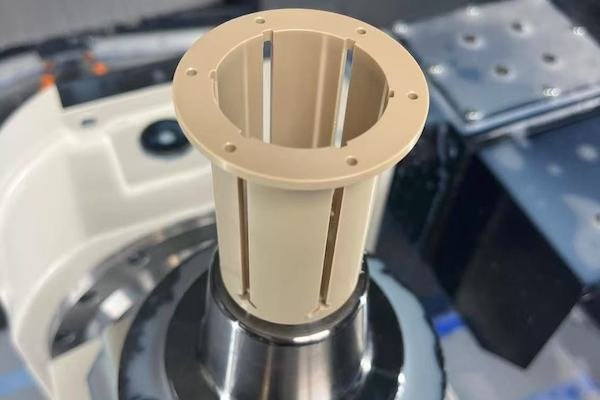
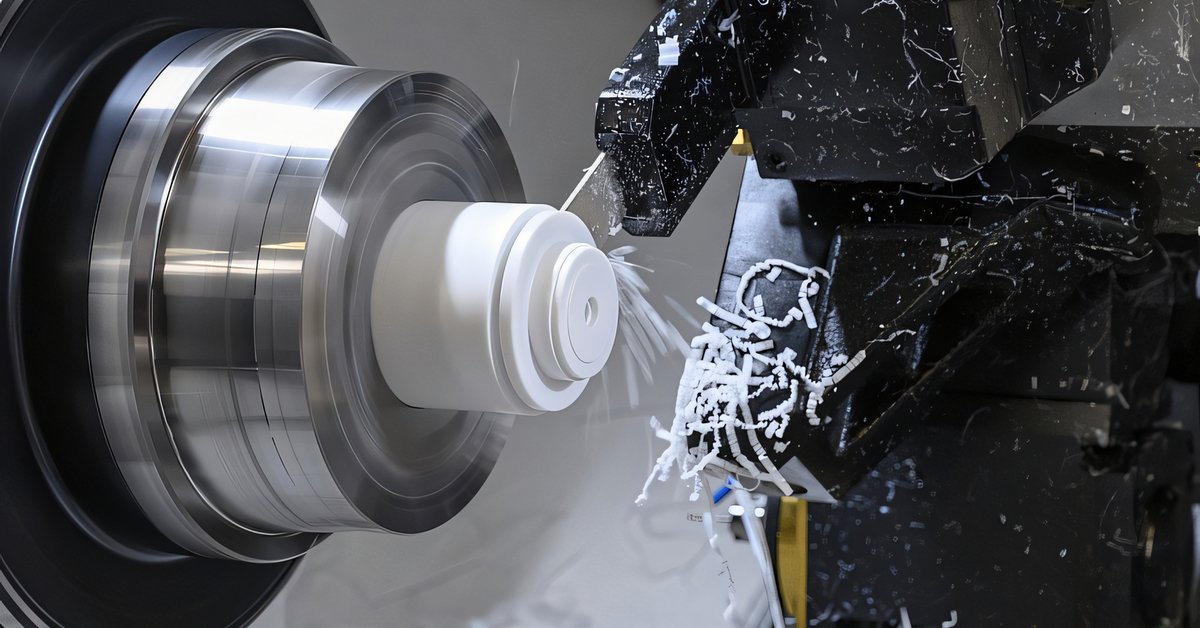
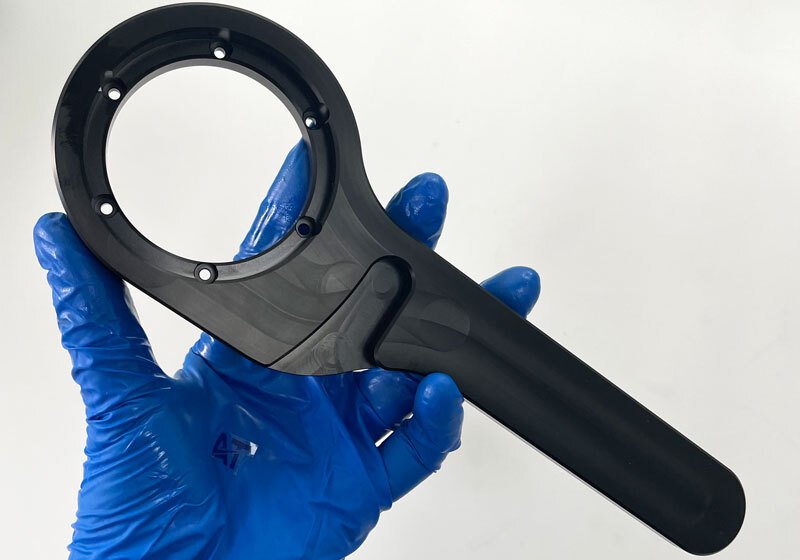
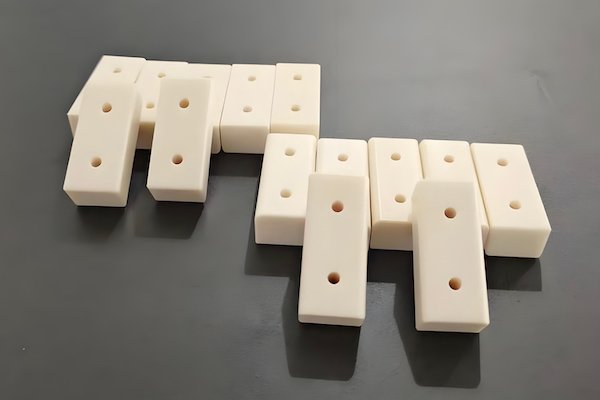
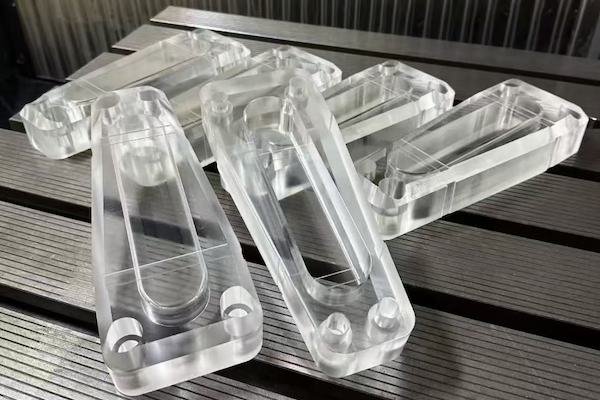
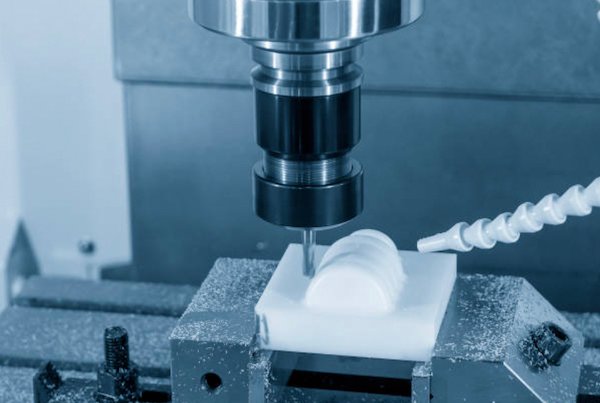
Plastic CNC Machining Material Comparison
There is no single best plastic for every machined part. POM is stable and easy to machine, nylon is tough, PTFE has very low friction, acrylic is clear, PE and PP resist chemicals, and PEEK is used when temperature, strength and dimensional stability are critical.
| Material | Key advantages | Typical CNC machined parts | Machining notes | Best for |
|---|---|---|---|---|
| POM / Delrin / Acetal | Good dimensional stability, low friction, high machinability | Bushings, gears, rollers, spacers, fixtures | Machines cleanly, but sharp tools and burr control are still important | Precision plastic mechanical parts |
| Nylon / PA / PA66 | Tough, wear-resistant, impact-resistant | Wear pads, wheels, guides, bushings, structural plastic parts | Can absorb moisture, which may affect final dimensions | Durable moving parts and wear components |
| PTFE / Teflon | Very low friction, excellent chemical resistance, high temperature resistance | Seals, gaskets, valve seats, insulation parts | Soft and flexible; needs support and gentle cutting to control deformation | Chemical and low-friction applications |
| Acrylic / PMMA | Transparent, polishable, good appearance | Display covers, windows, optical parts, light guides | Prone to cracking if tools are dull or heat builds up | Clear visual and display components |
| PE / HDPE / UHMWPE | Low moisture absorption, chemical resistance, impact resistance | Wear strips, cutting boards, liners, guides | Soft material may move under clamping; tolerance planning matters | Wear strips and chemical-resistant parts |
| PP | Lightweight, chemical resistant, economical | Chemical tanks, covers, lab fixtures, fluid-handling parts | Can be flexible and heat-sensitive during machining | Low-cost chemical-resistant parts |
| PVC | Good chemical resistance, easy to machine, economical | Fluid components, plates, guards, industrial fixtures | Use suitable dust/chip control and avoid overheating | General industrial plastic components |
| PEEK | High strength, high temperature capability, chemical resistance, excellent dimensional stability | Semiconductor parts, aerospace components, medical parts, high-performance bushings | More expensive; requires careful tool selection, heat control and inspection | High-performance precision plastic parts |
For tight-tolerance plastic parts, always consider moisture absorption, internal stress, wall thickness, clamping pressure and post-machining dimensional change. Plastic behaves differently from aluminum, brass or stainless steel.
When Should You Choose PEEK for CNC Machining?
PEEK is a premium engineering plastic used when ordinary plastics cannot handle the environment. It offers high strength, excellent wear resistance, strong chemical resistance and dimensional stability at elevated temperatures. For demanding industries such as aerospace, medical devices, semiconductor equipment, oil and gas, analytical instruments and high-performance automation, PEEK can replace metal in selected components while reducing weight and corrosion risk.
PEEK is not the default choice for every plastic part because material cost is high. It is best used where its performance solves a real problem: heat, chemical exposure, sterilization, electrical insulation, friction, weight or long service life.
PEEK is a strong candidate when the part needs:
- High temperature resistance
- Dimensional stability under load
- Chemical and wear resistance
- Electrical insulation
- Low outgassing or clean application performance
- Metal replacement in a lightweight assembly
Design Tips for CNC Machined Plastic Parts
Plastic parts can hold accurate features, but the design must respect the material. Thin walls, deep pockets, sharp internal corners and aggressive clamping can cause deflection or distortion. A small design change often improves machining stability, surface finish and inspection repeatability.
Use generous radii
Internal corners should match tool access whenever possible. Larger radii reduce stress and improve finish.
Avoid thin walls
Thin plastic walls flex under cutting force. Add thickness or ribs where the part function allows.
Control heat
Sharp tools, suitable feeds and chip evacuation help prevent melting, smearing or cracking.
Specify critical tolerances
Use general tolerances for non-critical features and tighter callouts only where function requires them.
CNC Plastic Machining Methods
| Process | Best use | Typical features | Quality considerations |
|---|---|---|---|
| CNC milling | Blocks, plates, pockets, slots and complex 3D shapes | Holes, pockets, steps, flat faces, contour profiles | Tool sharpness, fixturing and heat control |
| CNC turning | Round parts from rod or tube stock | Bushings, rollers, sleeves, spacers, threaded plastic parts | Concentricity, parting burrs and soft-material support |
| Drilling and tapping | Fasteners, fittings and assembly holes | Threads, counterbores, through holes, blind holes | Thread strength, chip evacuation and heat buildup |
| Polishing and finishing | Transparent acrylic and appearance parts | Clear edges, polished faces, cosmetic surfaces | Scratch prevention and controlled finishing sequence |
Applications for CNC Machined Plastic Components
Guides, fixtures, rollers, insulating plates and wear components.
PEEK, PTFE, PP and acrylic parts for fixtures, covers, fluid paths and instrument components.
Insulators, spacers, enclosures, test fixtures and connector-related parts.
PTFE, PP, PVC and PE components for corrosion-resistant environments.
UHMWPE, POM and nylon guide rails, wear strips and low-friction machine parts.
PEEK and advanced engineering plastics for lightweight, heat-resistant precision parts.
FAQ: CNC Plastic Machining
What is the easiest plastic to machine?
POM/Delrin is one of the easiest engineering plastics to machine because it is stable, strong and produces clean chips. It is often a good starting point for precision plastic mechanical parts.
Is PEEK better than nylon or POM?
PEEK is better only when the application needs high temperature resistance, chemical resistance, strength or long-term stability that nylon or POM cannot provide. For general parts, POM or nylon may be more cost-effective.
Can plastic CNC parts hold tight tolerances?
Yes, but tolerance depends on material, part size, wall thickness, machining method and inspection conditions. Moisture absorption, thermal expansion and stress relief must be considered.
Should I choose CNC machining or injection molding?
Choose CNC machining for prototypes, low-volume production, tight functional features and design changes. Choose injection molding for high-volume production after the design is stable and tooling cost is justified.
Need custom CNC machined plastic parts?
Send your drawing, 3D model, material requirement and quantity. Milemetal can review machinability, tolerance risk, material alternatives and finishing options before production.