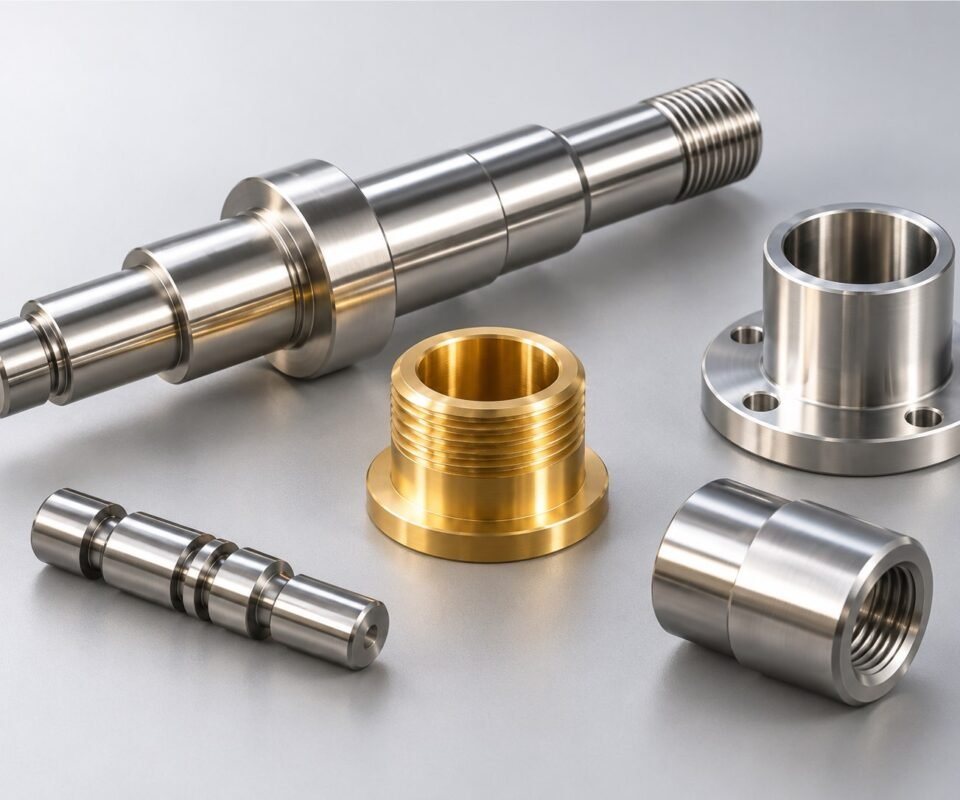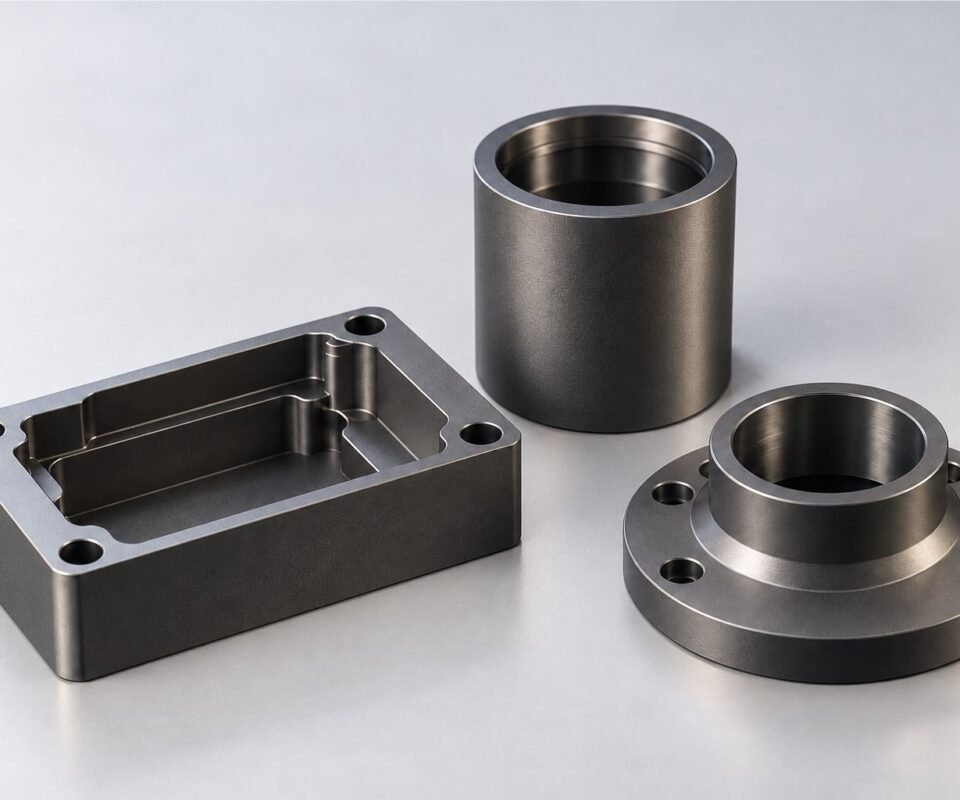

Metal Surface Finishing Types: Guide for CNC Machined Parts
2026-06-14
Sheet Metal Materials Selection Guide
2026-06-15
Sheet Metal Bend Radius Guide: Tables, Parameters and Design Rules for Fabricated Parts
Sheet metal parts look simple, but bend radius, material thickness, K-factor, bend allowance, flange length, hole distance and surface finish all affect whether the part can be formed accurately. This guide explains practical bend radius selection, common material parameters, bend allowance formulas, design tables and inspection tips for sheet metal brackets, covers, enclosures and precision formed components.
What Is Sheet Metal Bend Radius?
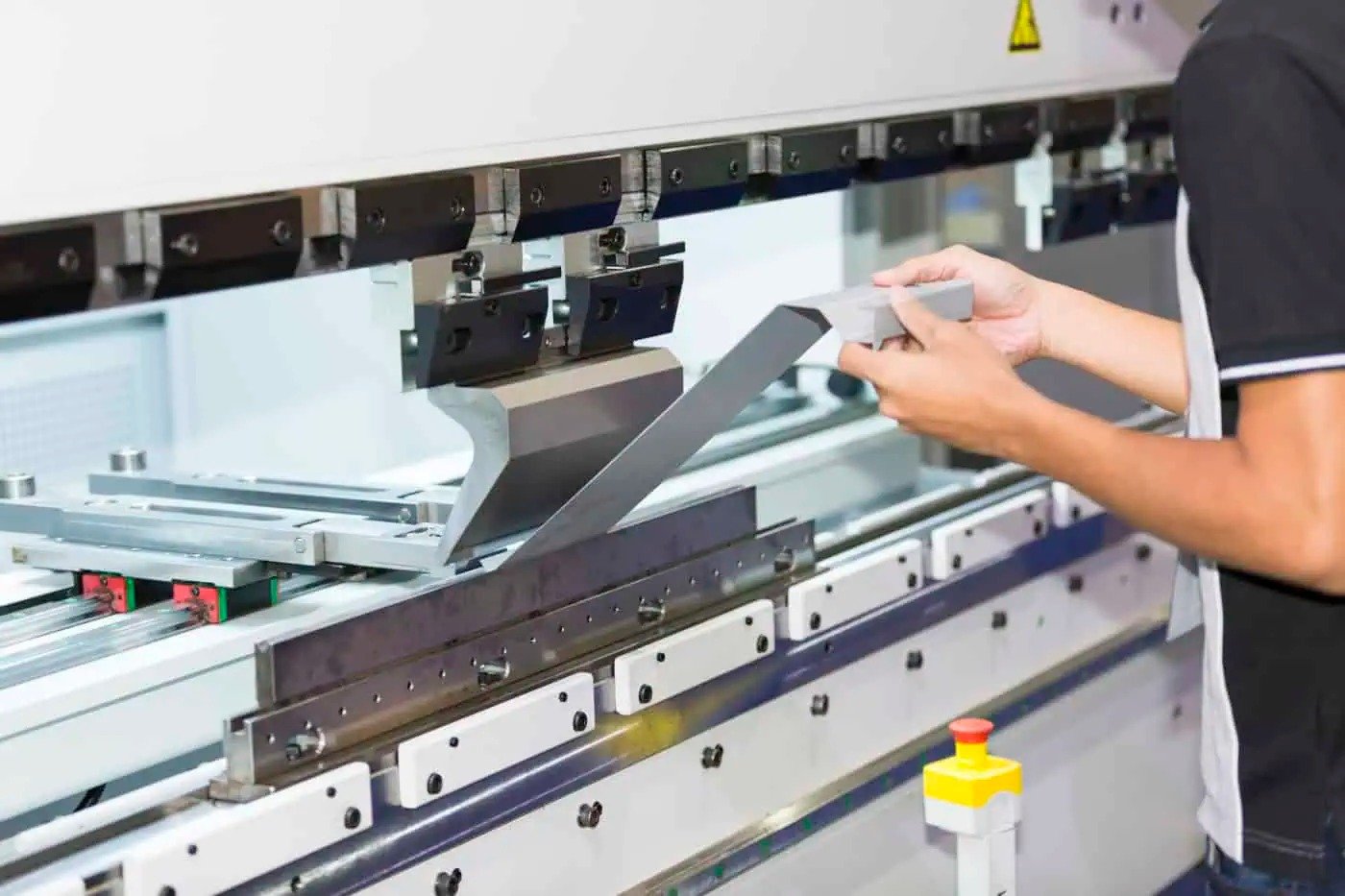
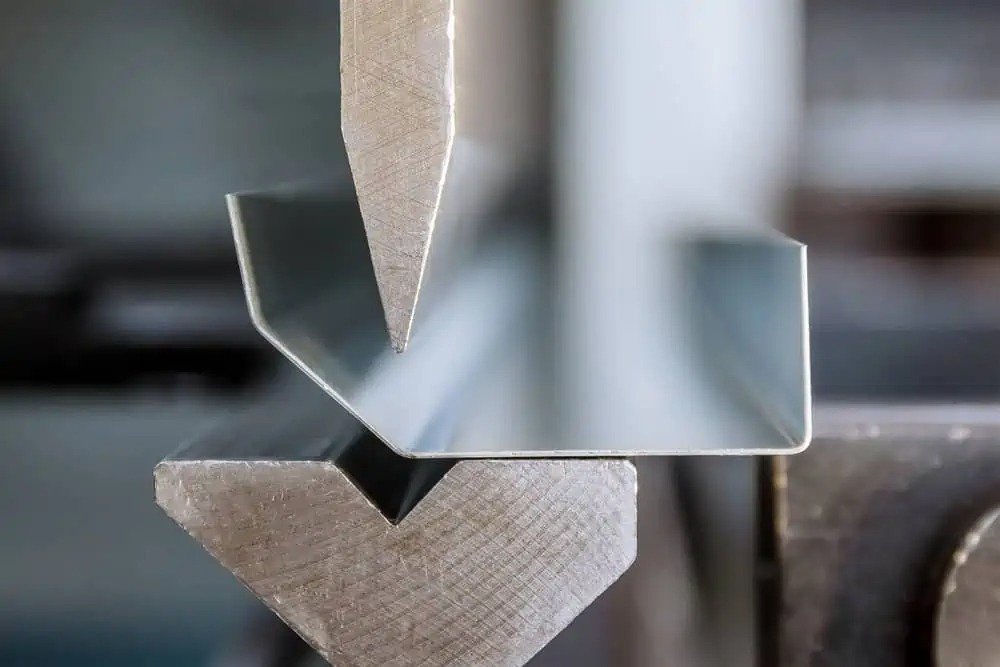
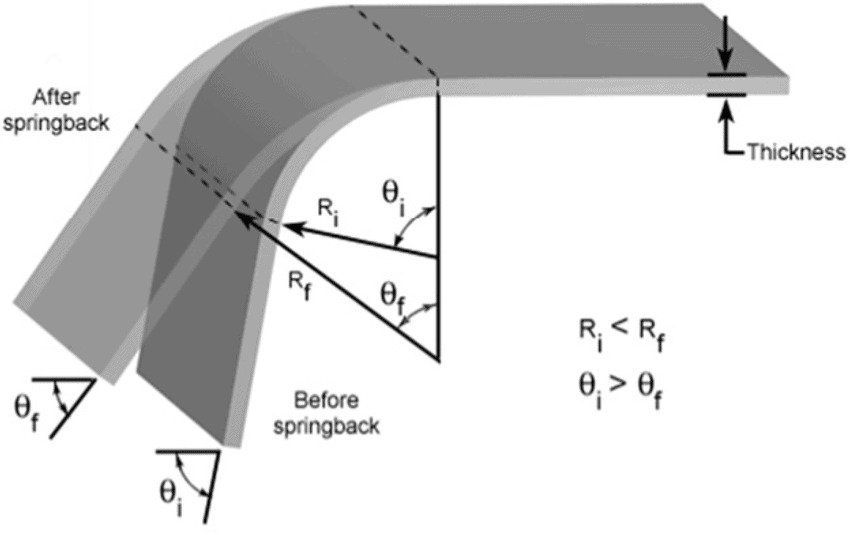
Sheet metal bend radius is the inside radius formed at the bend line after press brake bending, folding or roll forming. The inside radius is not only a drawing detail. It affects cracking risk, final dimensions, bend allowance, flange length, forming force, tool selection and the visual appearance of the part. A radius that is too small can crack aluminum, stainless steel or high-strength steel. A radius that is too large can change the layout and reduce dimensional control.
For many standard air-bent parts, a practical starting point is to use an inside bend radius close to the material thickness. For example, a 2.0 mm aluminum bracket often starts with a 2.0 mm inside bend radius. This is not a universal rule because material grade, hardness, grain direction, V-die opening and bend angle all matter, but it is a useful early design assumption.
Recommended Inside Bend Radius Table
The table below gives practical starting values for common sheet metal materials. Final values should be confirmed with the fabricator because tooling, material temper, grain direction and bend method can change the result.
| Material | Soft / annealed material | Standard sheet condition | Hard / high-strength condition | Common notes |
|---|---|---|---|---|
| Aluminum 5052 | 0.5 x T to 1.0 x T | 1.0 x T | 1.5 x T | Good bending alloy; common for brackets, panels and enclosures. |
| Aluminum 6061 | 1.0 x T to 2.0 x T | 2.0 x T to 3.0 x T | 3.0 x T or more | Less formable than 5052; T6 temper needs larger radius. |
| Mild steel / low carbon steel | 0.5 x T | 1.0 x T | 1.5 x T to 2.0 x T | Easy to form; common for painted or plated brackets. |
| Stainless steel 304 | 1.0 x T | 1.5 x T to 2.0 x T | 2.5 x T or more | Higher springback and work hardening than mild steel. |
| Stainless steel 316 | 1.0 x T to 1.5 x T | 2.0 x T | 2.5 x T or more | Often used for corrosion resistance; bend tooling marks may be more visible. |
| Brass | 0.5 x T to 1.0 x T | 1.0 x T to 1.5 x T | 2.0 x T or more | Temper affects formability; grain direction should be reviewed. |
| Copper | 0.5 x T | 1.0 x T | 1.5 x T to 2.0 x T | Soft copper bends well, but cosmetic marks and conductivity requirements matter. |
| Titanium sheet | 2.0 x T | 3.0 x T to 4.0 x T | 5.0 x T or more | Requires careful forming control and larger radii. |
T = sheet thickness. For example, 2.0 x T on 1.5 mm stainless steel means an approximate 3.0 mm inside bend radius.
Common Bend Parameters
| Parameter | Meaning | Typical starting value | Why it matters |
|---|---|---|---|
| Material thickness (T) | Actual sheet thickness | 0.5 mm to 6.0 mm for many precision sheet parts | Controls radius, V-die opening, bend force and minimum feature distance. |
| Inside bend radius (R) | Radius on the inside of the formed bend | Often 1.0 x T for ductile materials | Prevents cracking and determines bend allowance. |
| V-die opening (V) | Width of press brake die opening | About 6 x T to 10 x T for air bending | Affects natural inside radius, bend force and minimum flange length. |
| K-factor | Neutral axis position as a fraction of thickness | 0.30 to 0.45 for many bends | Used to calculate flat pattern length. |
| Bend angle | Angle swept by the bend | 90 degrees is common | Controls bend allowance and springback compensation. |
| Minimum flange length | Shortest safe straight edge after a bend | Often about 4 x T plus bend radius | Short flanges may slip into the die or form inaccurately. |
| Hole-to-bend distance | Distance from hole edge to bend tangent | Commonly 2.5 x T plus bend radius or more | Prevents hole distortion during forming. |
Bend Allowance, Bend Deduction and Flat Pattern Formulas
Sheet metal parts are usually cut flat and then bent. To make the final part accurate, the flat pattern must include material stretch around the bend. The most common way to estimate this is bend allowance, which uses thickness, inside radius, bend angle and K-factor.
Outside setback (OSSB) = tan(angle / 2) x (inside radius + thickness)
Bend deduction (BD) = 2 x OSSB – BA
Flat length = flange A + flange B – bend deduction
| Example | Thickness | Inside radius | Bend angle | K-factor | Approx. bend allowance | Use case |
|---|---|---|---|---|---|---|
| Aluminum bracket | 1.5 mm | 1.5 mm | 90 deg | 0.33 | 3.13 mm | General 5052 aluminum enclosure part |
| Mild steel cover | 2.0 mm | 2.0 mm | 90 deg | 0.38 | 4.34 mm | Painted or plated steel cover |
| Stainless bracket | 2.0 mm | 3.0 mm | 90 deg | 0.40 | 5.97 mm | 304 stainless formed part |
| Deep flange bend | 3.0 mm | 4.5 mm | 90 deg | 0.42 | 9.05 mm | Heavy duty formed bracket |
These formulas are starting points. Production shops often refine K-factor and bend deduction using their own material, tooling and machine data.
Recommended K-Factors by Material and Bending Technique
K-factor changes with material, inside bend radius, thickness and bending method. The table below provides practical starting values for common sheet metal design calculations. Final flat patterns should still be confirmed with production tooling and trial bends when accuracy is critical.
| Radius range | Aluminium 5082 | Aluminium 6061 | Aluminium 7075 | Stainless Steel 304 | Stainless Steel 316L | Steel S235/S355/DC01 |
|---|---|---|---|---|---|---|
| Air bending | ||||||
| R <= T | 0.36 | 0.38 | 0.40 | 0.42 | 0.43 | 0.45 |
| T < R <= 3T | 0.40 | 0.42 | 0.44 | 0.46 | 0.47 | 0.48 |
| R > 3T | 0.50 | 0.50 | 0.50 | 0.50 | 0.50 | 0.50 |
| Bottom bending | ||||||
| R <= T | 0.44 | 0.45 | 0.46 | 0.46 | 0.47 | 0.48 |
| T < R <= 3T | 0.47 | 0.48 | 0.49 | 0.48 | 0.49 | 0.50 |
| R > 3T | 0.50 | 0.50 | 0.50 | 0.50 | 0.50 | 0.50 |
| Coin bending | ||||||
| R <= T | 0.41 | 0.43 | 0.45 | 0.44 | 0.45 | 0.46 |
| T < R <= 3T | 0.46 | 0.47 | 0.48 | 0.47 | 0.48 | 0.49 |
| R > 3T | 0.50 | 0.50 | 0.50 | 0.50 | 0.50 | 0.50 |
R = inside bend radius. T = material thickness. For high-accuracy flat patterns, treat these K-factors as starting values and adjust them using real shop bend data.
Relative Bend Force by Material
Bend force rises with material thickness, tensile strength and smaller V-die openings. The chart below gives a practical comparison using mild steel as the baseline.
Sheet Metal Design Rules
Use practical radius
Start with inside radius near material thickness, then adjust for material grade and tooling.
Keep holes away from bends
Place holes at least 2.5 x T plus radius from the bend tangent when possible.
Check minimum flanges
Very short flanges may not form accurately in the V-die.
Plan finishing early
Powder coating, anodizing, plating and brushing can affect holes, edges and appearance.
- Keep bend radii consistent across a part when possible to reduce tool changes.
- Avoid placing slots, holes or embossments too close to bend lines.
- Use relief cuts when flanges intersect or when a bend ends near another feature.
- Specify grain direction if cracking, appearance or strength is important.
- Use realistic tolerances for formed angles, flange length and flatness.
- Define whether dimensions apply before or after finishing.
Sheet Metal Tolerances and Inspection
Formed sheet metal tolerances are different from CNC machining tolerances. Cutting processes can control hole locations and profiles tightly, but bending introduces springback, tooling variation and material batch differences. Functional dimensions should be tied to datums that represent how the part is assembled.
| Inspection item | Common risk | Recommended check |
|---|---|---|
| Bend angle | Springback or overbending variation | Angle gage, CMM or fixture check |
| Flange length | Incorrect bend deduction or short flange forming | Caliper, height gage or fixture |
| Hole position after bending | Distortion near bend lines | Inspect from functional datums after forming |
| Flatness | Warping from cutting, bending, welding or finishing | Surface plate, fixture or CMM |
| Bend radius | Wrong tooling or cracking risk | Radius gage or profile inspection |
| Surface finish | Tool marks, coating buildup, scratches or color variation | Visual standard, coating thickness and appearance inspection |
FAQ: Sheet Metal Bend Radius and Design
What is a good minimum bend radius for sheet metal?
A practical starting point is an inside bend radius equal to the material thickness. Softer metals may use smaller radii, while stainless steel, 6061-T6 aluminum and high-strength steel often need larger radii.
What is K-factor in sheet metal bending?
K-factor describes the position of the neutral axis through the sheet thickness during bending. It is used to calculate bend allowance and flat pattern length.
How far should holes be from a bend?
A common starting rule is to keep the hole edge at least 2.5 times material thickness plus the bend radius away from the bend tangent. Critical designs should be reviewed with the fabricator.
Does powder coating affect sheet metal dimensions?
Yes. Powder coating adds thickness and can affect holes, slots, threads, grounding points and tight assembly features. Masking may be required.
Why do sheet metal bend angles vary?
Bend angles vary because of springback, material batch differences, thickness variation, tooling condition and press brake setup. Inspection fixtures and realistic angle tolerances help control production.
Need help with sheet metal bend design?
Send your drawing, material, thickness, finish, quantity and tolerance requirements. Milemetal can review bend radius, flat pattern, feature spacing and manufacturability before production.