CNC Machining Materials Selection Guide: Metals, Plastics, Cost and Performance
2026-06-13
Hard Anodizing vs Regular Anodizing: How to Choose the Right Finish for Aluminum CNC Parts
2026-06-13
CNC Machining vs 3D Printing: How to Choose the Right Process for Custom Parts
CNC machining and 3D printing can both produce prototypes and low-volume production parts, but they solve different problems. CNC machining cuts material from solid stock for accurate, strong and smooth parts. 3D printing builds parts layer by layer for fast iteration and complex shapes. This guide compares both processes by material, tolerance, strength, geometry, cost, lead time and production volume.
CNC Machining and 3D Printing: The Basic Difference
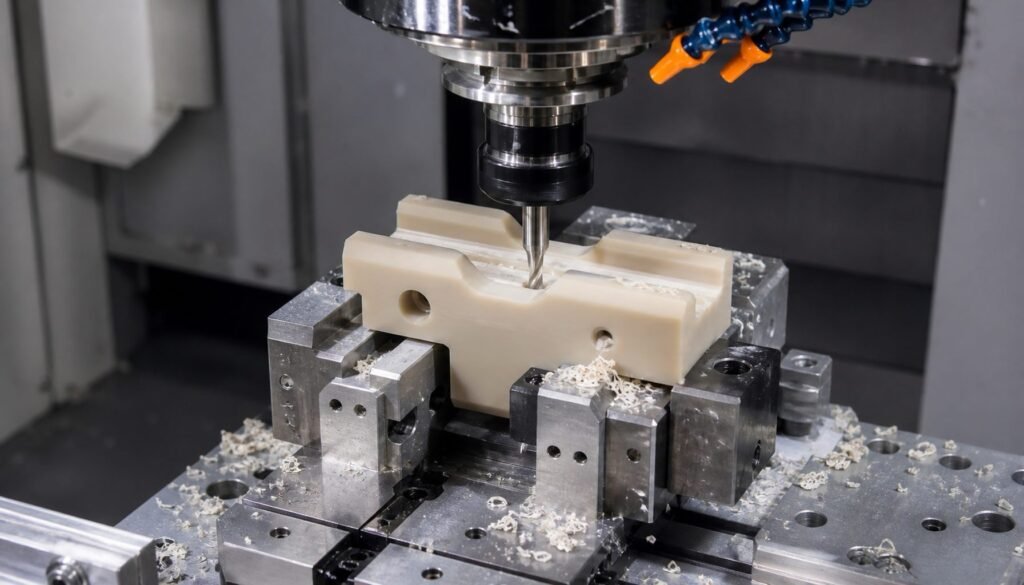
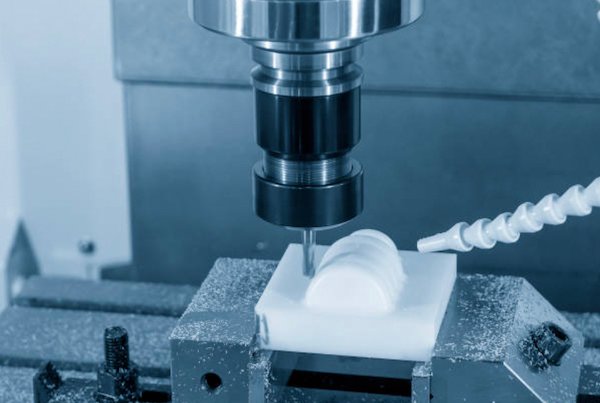
CNC machining is a subtractive process. A block, bar or plate of metal or plastic is cut by tools until the final geometry is produced. 3D printing is an additive process. Material is deposited, cured or fused layer by layer until the part is complete. Because the processes create parts in opposite ways, they have very different strengths.
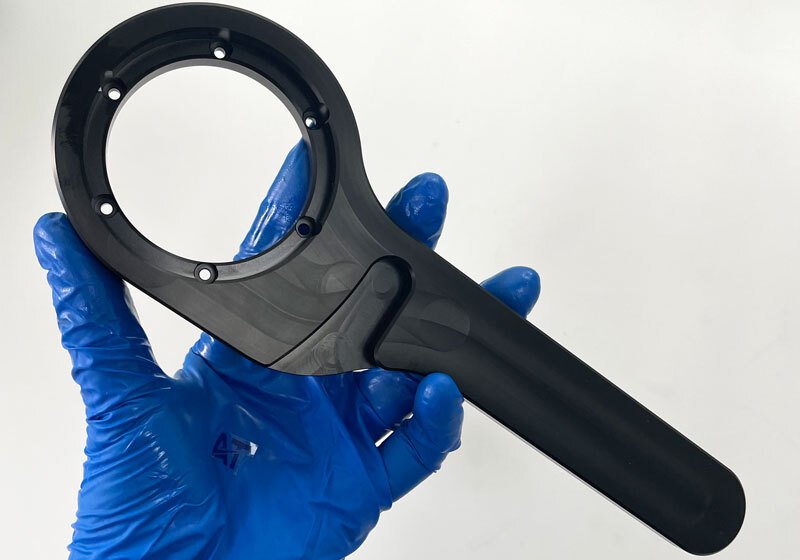
CNC machining is usually better for functional parts that need tight tolerances, smooth surfaces, production-grade materials, threaded features, sealing faces, bearing bores or predictable mechanical properties. 3D printing is usually better for rapid prototypes, complex internal geometry, lightweight lattices, organic shapes, low-volume plastic parts and design iteration before tooling or machining.
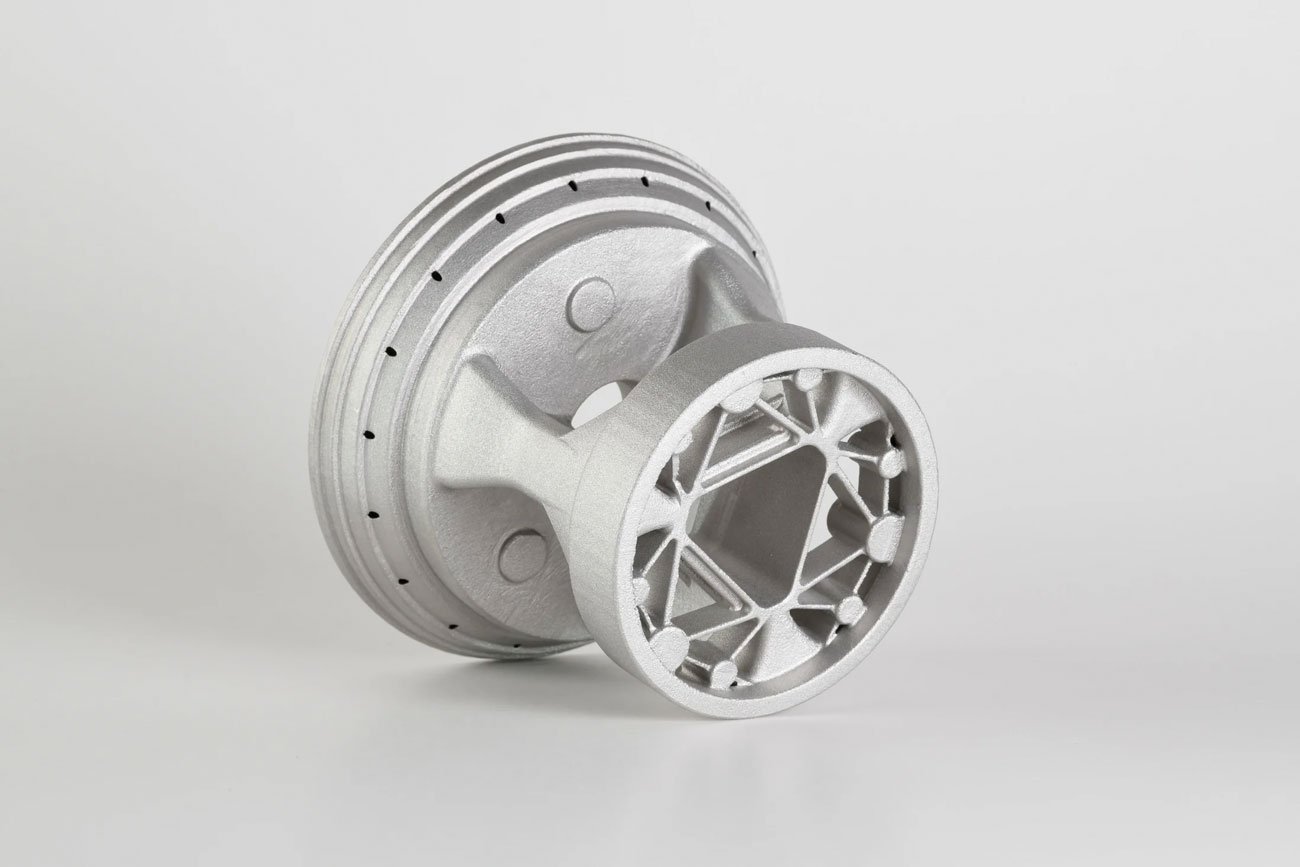
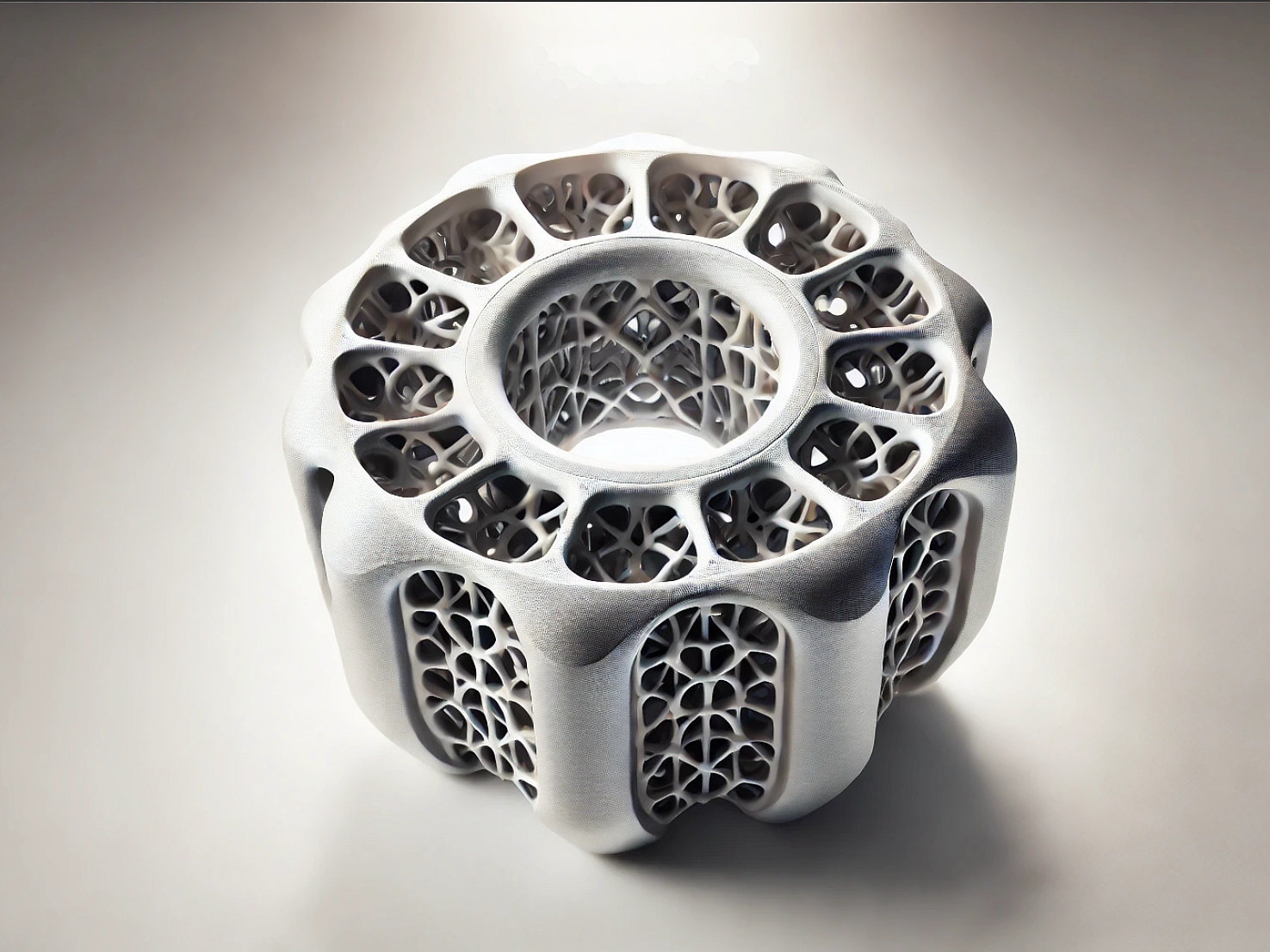
Quick Comparison: CNC Machining vs 3D Printing
The table below gives a practical starting point. Actual results depend on material, geometry, machine type, build orientation, finishing method, tolerance requirement and quantity.
| Factor | CNC machining | 3D printing | Which to choose? |
|---|---|---|---|
| Process type | Subtractive: cuts from solid stock | Additive: builds layer by layer | CNC for precision stock material; 3D printing for fast shape creation |
| Material properties | Uses real billet, bar or sheet material with consistent properties | Properties depend on print process, orientation, density and post-processing | CNC for load-bearing and production-like testing |
| Geometry | Limited by tool access, internal radius and fixturing | Excellent for organic shapes, lattices and internal channels | 3D printing for geometry that cutters cannot reach |
| Tolerance | Good for tight tolerances, flatness, bores and datum features | Usually less precise unless followed by post-machining | CNC for tight fit, sealing, sliding or bearing features |
| Surface finish | Can produce smooth machined surfaces and defined roughness | Layer lines or powder texture often need finishing | CNC for cosmetic or sealing surfaces |
| Lead time | Programming, setup and material prep take time | Often faster for simple one-off prototypes | 3D printing for early concept models |
| Quantity | Better as quantity increases and setup cost is spread out | Good for very low volume and design iteration | CNC for repeat batches; 3D printing for one-offs |
| Cost driver | Toolpath time, setup, material removal, fixturing, inspection | Build time, material volume, support removal, post-processing | Compare by geometry, material and quantity |
Material Options and Process Compatibility
Material choice is often the first major decision. CNC machining can use metals and engineering plastics in their standard stock forms. 3D printing uses process-specific filaments, powders, resins or metal powders. Even when the material name looks similar, the final performance may not be identical because printing creates layer structures and process-dependent density.
| Material | CNC machining | 3D printing | Selection note |
|---|---|---|---|
| Aluminum | Excellent for prototypes, housings, brackets and production parts | Available in metal printing, but cost and process choice matter | CNC is usually more economical for accurate aluminum parts |
| Stainless steel | Good for corrosion-resistant machined parts | Metal printing possible for complex forms | CNC for precision, threads and smooth sealing surfaces |
| ABS | Machinable for functional plastic prototypes | Common in FDM printing | 3D printing is fast for form models; CNC improves surface and accuracy |
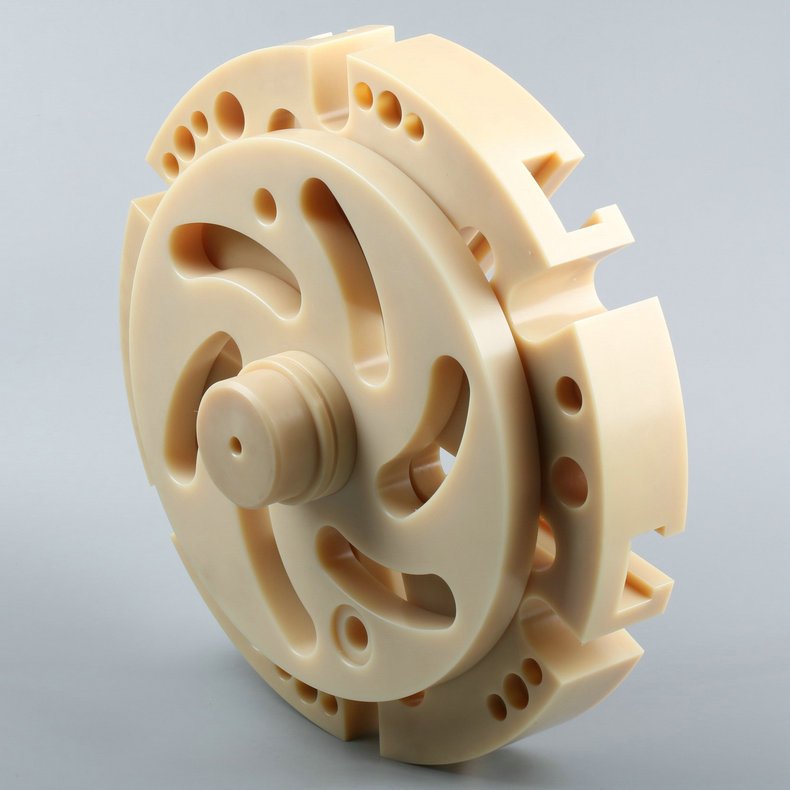
| Nylon / PA | Good for wear pads, guides and bushings | SLS and MJF are common for nylon parts | Use CNC for tight fits; use printing for complex lightweight plastic shapes |
| POM / Delrin | Excellent CNC material for low friction and stability | Limited and difficult compared with common print materials | CNC is usually preferred for precision POM parts |
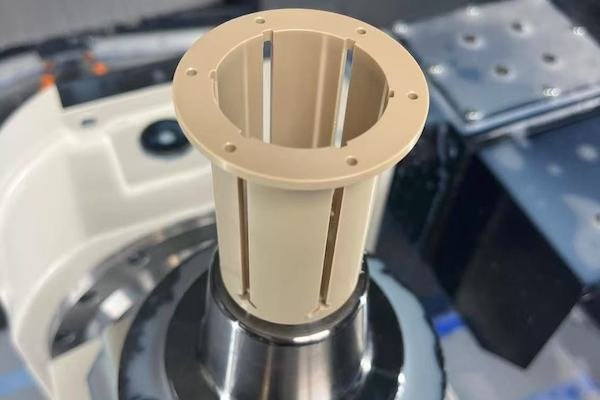
| PEEK | Excellent for high performance machined parts | Printable with specialized equipment | CNC is often chosen for precise PEEK parts and reliable stock properties |
| TPU / flexible materials | Usually not ideal for CNC machining | Common in 3D printing for flexible parts | 3D printing is better for flexible prototypes |
| Photopolymer resin | Not a standard CNC stock material | Common in SLA/DLP printing | Useful for appearance models, fine detail and visual prototypes |
Mechanical Strength, Accuracy and Surface Finish
For functional components, the biggest difference is often not shape but performance. CNC machined parts are cut from solid material, so strength and stiffness are generally consistent throughout the part. Many 3D printed parts are anisotropic, meaning their properties change by direction because of layer bonding, print orientation or powder fusion behavior.
CNC machining is stronger for load-bearing prototypes when the same base material is available as stock.
CNC is usually better for tight tolerances, bearing bores, threads, sealing grooves and datum surfaces.
CNC can create smooth surfaces directly; 3D printing may need sanding, polishing, coating or machining.
3D printing can create lattice structures, internal channels and organic forms that CNC tools cannot reach.
CNC tapping or thread milling is more reliable for functional metal or plastic threads.
3D printing is excellent for quick form checks before spending time on CNC programming and fixtures.
Cost, Quantity and Lead Time
For one simple prototype, 3D printing can be faster and cheaper because setup is low and no cutting tools or fixtures are needed. For functional prototypes that need real material, tight tolerance or smooth surfaces, CNC machining often becomes the better value. For medium or repeat production volumes, CNC setup cost can be spread across multiple parts, making per-part cost more attractive.
| Quantity / situation | Best starting choice | Reason | Watch out for |
|---|---|---|---|
| 1 visual concept model | 3D printing | Fast and low setup cost | Surface and strength may not represent final production part |
| 1 functional prototype | CNC machining or 3D printing | Depends on material and tolerance needs | If strength, threads or sealing matter, CNC is safer |
| 5-20 design validation parts | CNC machining for final material; 3D printing for form tests | Both can be useful at this stage | Do not validate load or wear using the wrong material/process |
| 50+ repeat parts | CNC machining, molding or casting depending on geometry | Setup cost spreads over batch quantity | Injection molding may be better for high-volume plastic parts |
| Complex internal channels | 3D printing | Additive process can create enclosed geometry | Post-processing, cleaning and inspection may be difficult |
| Tight tolerance production features | CNC machining | Better dimensional control and inspection strategy | Part geometry must allow tool access |
Design Rules: What Each Process Likes
A design that is easy to print may be difficult to machine, and a design that is easy to machine may not use the full design freedom of 3D printing. Choosing the process early helps avoid redesign later.
Design for CNC machining
- Keep tool access in mind for pockets, holes and side features.
- Avoid unnecessarily deep narrow cavities.
- Use internal radii that match practical cutter sizes.
- Provide flat fixturing surfaces where possible.
- Call out only the tolerances that are functionally required.
- Use separate setups only when geometry or function requires it.
Design for 3D printing
- Consider layer direction and support requirements.
- Use lattice, hollow or organic geometry where it adds value.
- Plan escape holes for trapped powder or resin when needed.
- Avoid unsupported overhangs unless the process can handle them.
- Expect post-processing for smooth or cosmetic surfaces.
- Validate strength with the real print process and orientation.
When Injection Molding Becomes Better Than Both
For high-volume plastic parts, neither CNC machining nor 3D printing may be the final production method. Injection molding has high upfront tooling cost, but very low per-part cost at scale. It is often the best choice when the design is mature, quantities are high, material is moldable and consistent surface quality is required.
| Choose injection molding when | Why | Before tooling, use |
|---|---|---|
| Annual quantity is high | Tooling cost is amortized across many parts | 3D printing for early shape checks, CNC for functional prototypes |
| Consistent plastic properties are required | Molding gives repeatable production material behavior | CNC machined plastic prototypes for fit and function |
| Thin walls and snap features are needed | Molding can produce thin repeatable plastic geometry efficiently | 3D printed design iterations before mold design |
| Final cosmetic quality matters | Tool surface controls production appearance | CNC or printed prototypes to approve size and styling |
Final Decision Guide
Start with purpose
Is the part for visual review, fit check, functional test or production use?
Check geometry
Can cutting tools reach the important features, or does the part need additive freedom?
Review material
Does the required material exist as CNC stock, printable material or molded resin?
Plan scale-up
Choose a prototype route that does not hide future production risks.
Choose CNC machining when
- The part needs tight tolerances, flatness, bores, threads or sealing faces.
- The final material must be aluminum, stainless steel, brass, copper, POM, PEEK or another stock material.
- Strength, stiffness, wear behavior and surface finish must represent production performance.
- The quantity is more than a few pieces and repeatability matters.
Choose 3D printing when
- You need fast visual prototypes or early form-fit review.
- The geometry has internal channels, lattice structures, organic forms or features impossible to machine.
- The quantity is very low and mechanical performance is not the main risk.
- You need flexible materials, photopolymer resins or additive-specific materials.
FAQ: CNC Machining vs 3D Printing
Is CNC machining stronger than 3D printing?
Often yes, especially when the same material is available as solid stock. CNC parts are cut from solid material, while 3D printed parts may have layer-dependent strength and density differences.
Is 3D printing cheaper than CNC machining?
For one-off visual prototypes, 3D printing is often cheaper. For functional parts, tighter tolerances, production-grade materials or repeat batches, CNC machining may be more cost-effective.
Which process is better for plastic prototypes?
Use 3D printing for fast form and concept models. Use CNC machining when the prototype must be made from real engineering plastic such as POM, PEEK, nylon or polycarbonate with better accuracy and surface finish.
Can CNC machining and 3D printing be used together?
Yes. A common path is to use 3D printing for early design iterations, then CNC machining for functional prototypes and critical tolerance validation.
Need help choosing CNC machining or 3D printing?
Send your drawing, 3D model, target quantity, material, tolerance, finish and application. Milemetal can review whether CNC machining, 3D printing, injection molding or a combined route is the best fit.