
Design Guide for Swiss machining-Type CNC Machining
2026-06-14
Metal Surface Finishing Types: Guide for CNC Machined Parts
2026-06-14
PTFE Machining Guide: How to CNC Machine Teflon Parts with Stable Tolerance and Clean Edges
PTFE, commonly known by the Teflon brand name, is one of the most useful plastics for low friction, chemical resistance and non-stick performance. It is also soft, flexible and easy to deform during machining. This guide explains PTFE material behavior, common grades, CNC turning and milling practices, design rules, tolerance planning, burr control and inspection for custom PTFE parts.
What Is PTFE and Why Is It Used for Machined Parts?
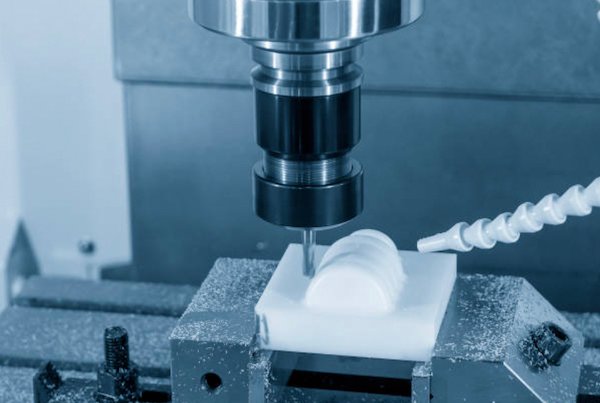
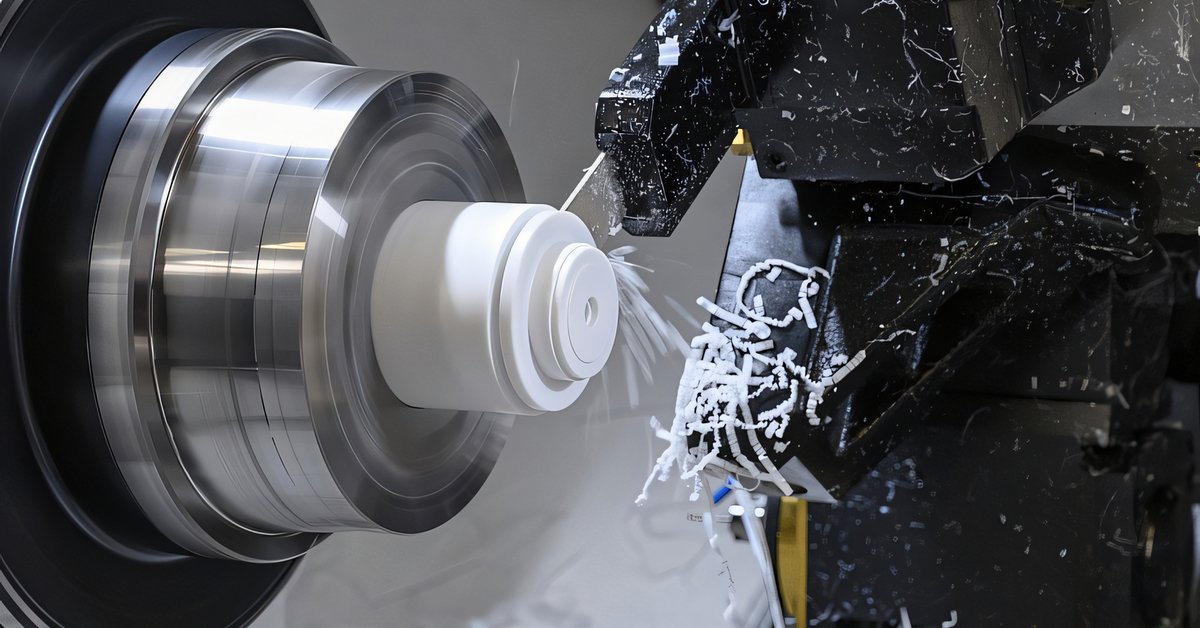
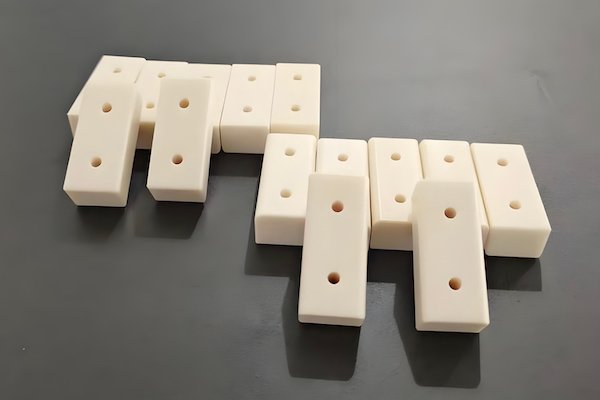
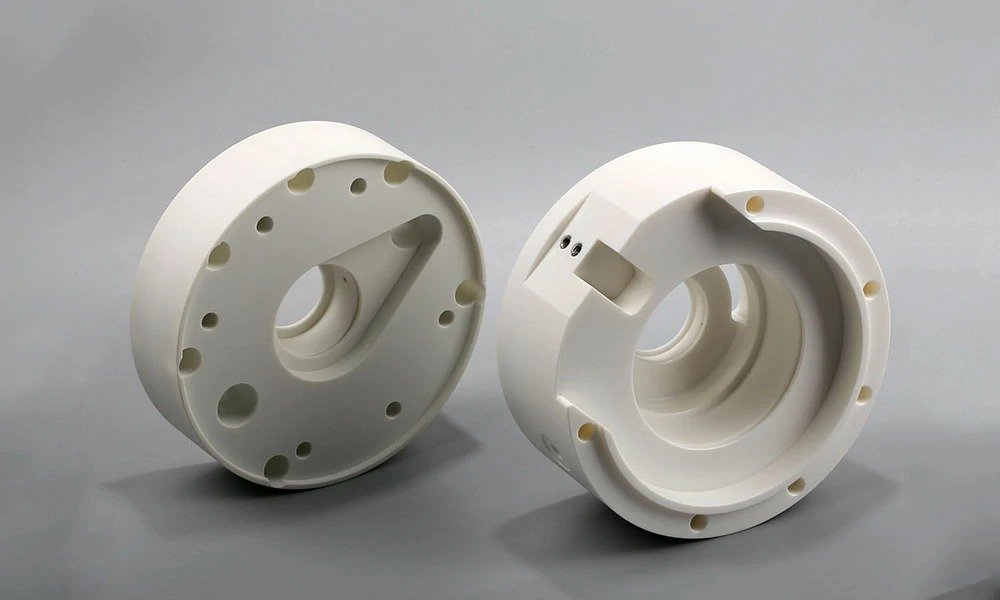
PTFE is a fluoropolymer valued for its extremely low coefficient of friction, chemical resistance, electrical insulation and wide service temperature range. In machined components, PTFE is often selected when a part must slide, seal, insulate or survive aggressive chemicals without sticking to mating surfaces. Typical CNC machined PTFE parts include seals, gaskets, valve seats, bushings, washers, insulators, spacers, guide rings and chemical handling components.
The same properties that make PTFE useful also make it harder to machine accurately. PTFE is softer and more elastic than POM, PEEK or acrylic. It can compress under clamping pressure, move away from the cutting tool, expand with heat and change dimension after machining. Successful PTFE machining depends on cutting strategy as much as nominal tolerance.

PTFE Grades and Filled PTFE Options
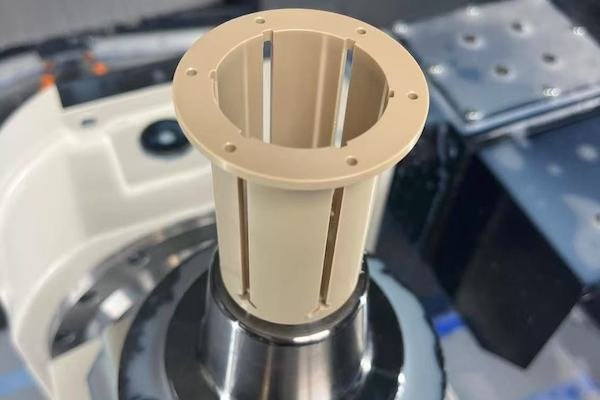
Virgin PTFE is the most familiar form, but filled PTFE grades are often used when a part needs better wear resistance, lower deformation, improved dimensional stability or higher compressive strength. Fillers can change machinability, color, friction, strength and compatibility with the working environment. The correct grade should be selected from the part function, not only from a material name.
| PTFE type | Main advantage | Typical machined parts | Design note |
|---|---|---|---|
| Virgin PTFE | Excellent chemical resistance, low friction and electrical insulation | Gaskets, insulators, soft seals, spacers | Softest option; expect more deformation and creep under load |
| Glass-filled PTFE | Improved wear resistance and dimensional stability | Valve seats, guide rings, wear pads, bushings | More abrasive to tools than virgin PTFE |
| Carbon-filled PTFE | Better wear behavior, thermal conductivity and compressive strength | Dynamic seals, compressor parts, bearing components | Often used where sliding performance matters |
| Bronze-filled PTFE | Improved load capacity and wear resistance | Bearings, bushings, thrust washers | Not suitable where full chemical resistance or electrical insulation is required |
| Graphite-filled PTFE | Improved self-lubricating behavior and wear performance | Seals, bearings and low-friction sliding parts | Check environment and mating material compatibility |
| Modified PTFE | Lower porosity and improved deformation behavior compared with standard PTFE | High-performance seals and precision fluid components | Useful when sealing reliability is more important than lowest cost |
Why PTFE Is Challenging to CNC Machine
PTFE does not cut like metal or rigid engineering plastic. It is elastic, has low stiffness and can deform before the cutting edge removes material. When the tool pressure is too high, the part can push away and spring back, creating taper, oversize features or inconsistent roundness. PTFE also has a relatively high thermal expansion rate, so heat from machining or measurement conditions can affect final size.
The part can compress under clamping and move under cutting force, especially on thin walls and long features.
PTFE can slowly deform under load, so functional fit should consider long-term compression, not only initial size.
Dull tools and poor chip control can create fuzzy edges, stringy chips and difficult deburring.
Heat can change dimensions during machining and inspection, so gentle cutting and stable measurement conditions matter.
Tool pressure can distort the material instead of cutting it cleanly, especially with aggressive depths of cut.
Hard jaws or high clamp pressure can leave marks or change dimensions on soft PTFE surfaces.
CNC Turning and Milling Practices for PTFE
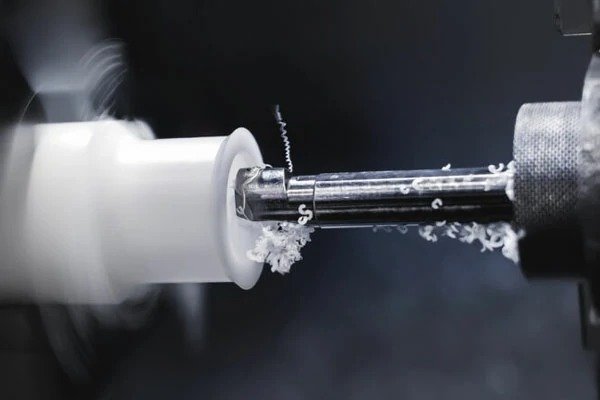
PTFE machining usually benefits from sharp tools, polished cutting edges, positive rake geometry and conservative cutting forces. The goal is to slice material cleanly rather than push it. Fixturing should support the workpiece broadly without crushing it. For thin rings or sleeves, soft jaws, custom mandrels or sacrificial support can improve roundness.
| Machining area | Recommended practice | Why it matters |
|---|---|---|
| Tooling | Use sharp tools with positive rake and polished edges | Reduces tearing, push-off and fuzzy burrs |
| Clamping | Use soft jaws, broad contact and controlled pressure | Prevents compression marks and dimensional shift |
| Turning | Use stable support and light finishing passes | Improves roundness, diameter consistency and surface finish |
| Milling | Use sharp end mills, good chip clearance and moderate engagement | Reduces heat buildup and edge tearing |
| Drilling | Use sharp drills, peck cycles and proper chip evacuation | Improves hole size and reduces stringy chips |
| Deburring | Plan deburring method before production | PTFE burrs can bend rather than break, so manual and controlled deburring may be needed |
Design Tips for PTFE Machined Parts
A good PTFE part design avoids asking the material to behave like steel or aluminum. Instead, it uses practical wall thickness, generous radii and tolerances that match the real assembly requirement. For seals and sliding parts, performance often depends more on material grade, mating surface and compression than on making every dimension extremely tight.
Avoid very thin walls
Thin PTFE walls can flex during machining and installation. Add support or increase thickness where possible.
Use practical tolerances
Apply tight tolerances only to sealing, sliding or assembly-critical features.
Add generous radii
Sharp internal corners increase stress and tool pressure. Radii improve machinability and durability.
Plan compression
For seals and gaskets, design around controlled squeeze, creep and operating temperature.
- Use larger bearing surfaces when PTFE parts will be clamped or compressed.
- Avoid deep narrow grooves unless the tool can cut cleanly and chips can escape.
- Define whether burr-free edges are required on sealing lips, holes or grooves.
- Consider filled PTFE if the part needs better wear resistance or lower deformation.
- Specify the operating temperature, chemical exposure and mating material when requesting a quote.
- For tight fits, confirm whether the dimension is measured free-state or after installation.
PTFE Tolerances, Surface Finish and Inspection
PTFE can be machined accurately, but tolerance expectations should account for softness, thermal expansion and measurement method. A metal-style tolerance on a thin PTFE ring may be technically possible in inspection but unreliable after assembly. For functional parts, it is better to identify the features that truly control sealing, sliding or location and give those features the strictest requirements.
| Feature | Risk | Recommended drawing note |
|---|---|---|
| Sealing lips and faces | Burrs, dents or compression can affect sealing | Define surface finish, burr limit and inspection surface clearly |
| Thin rings and sleeves | Out-of-round condition from clamping or release | Specify free-state measurement method and functional fit requirement |
| Threaded PTFE parts | Threads can deform under load and cross-thread easily | Use generous lead-in chamfers and define gage or mating part |
| Small holes | Hole size may close slightly due to elastic recovery | Use practical hole tolerances and test with pin gages where needed |
| Sliding surfaces | Too rough or torn surface may increase wear | Specify roughness only where the mating function requires it |
Quality Control for Custom PTFE Parts
PTFE inspection should be matched to the part function. For a gasket, thickness and surface defects may matter most. For a valve seat, concentricity, sealing face finish and burr control may be critical. For an electrical insulator, material grade and clean edges may be more important than cosmetic appearance. Inspection conditions should be stable because temperature and clamping can change readings.
Important checks
- Material grade and filler confirmation
- Critical OD, ID, thickness and groove dimensions
- Roundness or concentricity on sealing and rotating parts
- Burrs on holes, edges, grooves and sealing faces
- Surface dents, clamp marks and handling damage
- Fit check with mating hardware when function is sensitive
FAQ: PTFE / Teflon CNC Machining
Is PTFE easy to machine?
PTFE cuts easily, but it is not always easy to machine accurately. Its softness, flexibility and thermal expansion can make tight tolerance, thin-wall and burr-free features challenging.
What is the difference between PTFE and Teflon?
PTFE is the material name. Teflon is a well-known brand name for PTFE and related fluoropolymer products. In machining, customers often use both terms to describe similar low-friction parts.
Can PTFE hold tight tolerances?
PTFE can hold controlled dimensions when the part is well supported and designed realistically, but it usually cannot be treated like rigid metal. Thin sections, temperature change and compression can affect final size.
When should filled PTFE be used?
Filled PTFE is useful when virgin PTFE has too much deformation, wear or creep. Glass, carbon, bronze and graphite fillers can improve wear resistance, stability or load capacity.
What applications use machined PTFE parts?
Common applications include seals, gaskets, valve seats, insulators, bushings, spacers, chemical handling parts, guide rings and low-friction sliding components.
Need custom PTFE machined parts?
Send your drawing, PTFE grade, quantity, tolerance requirements, sealing function and operating environment. Milemetal can review the design and recommend practical machining and inspection methods.