
Hardness Conversion Chart: HV, HRC, HB & HRB
2026-05-18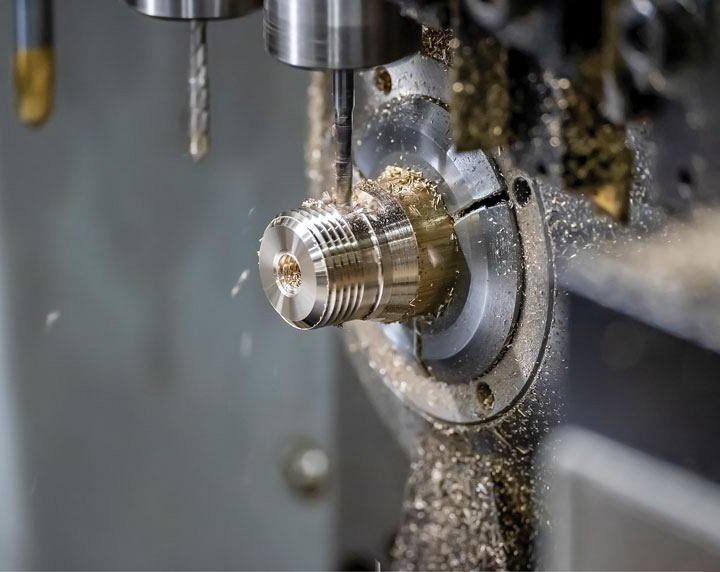
Design for CNC Machining: DFM Guide
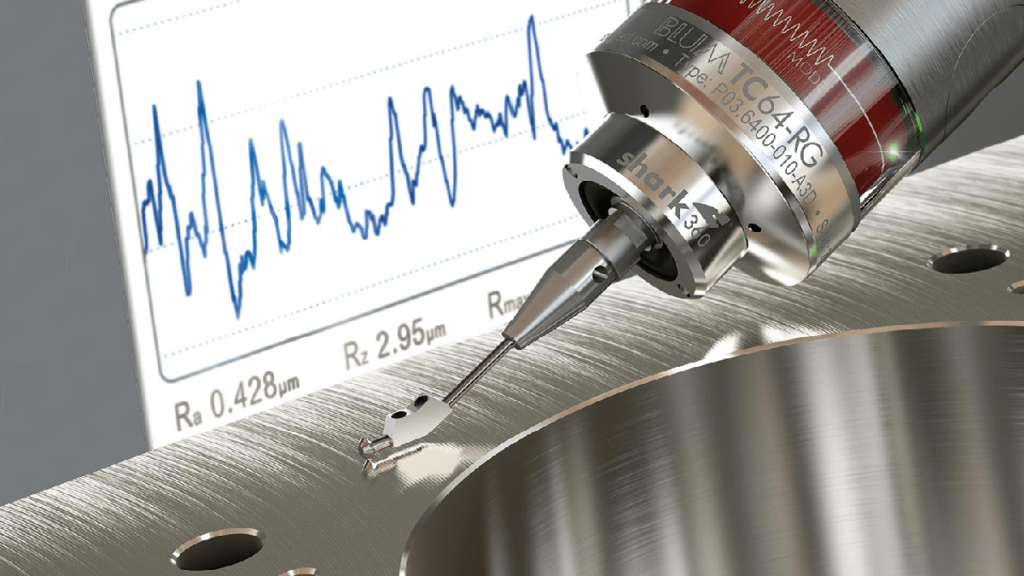
2026-06-04Surface roughness affects sealing, friction, wear, coating adhesion, corrosion resistance, and visual appearance. For CNC machined parts, the most common values are Ra, Rz, RMS, and ISO N grades.
In CNC machining and custom manufacturing, surface roughness is not merely an aesthetic choice—it is a critical cost driver. Over-specifying tolerances and Ra values is the leading cause of artificially inflated part costs, often increasing manufacturing expenses by over 30%. If surface texture matters to your product’s sealing, friction, or coating adhesion, this guide will help you interpret standard symbols and apply the right specifications without breaking your budget.
This article provides the most comprehensive surface roughness chart and explains how to balance mechanical performance with cost-effective manufacturing.
Why does Machining Inevitably Produce Roughness?
Unlike processes such as mold injection molding or investment casting, CNC machining is a subtractive manufacturing process. All parts are formed on machine tools using cutting tools to remove excess material from the workpiece. The main causes are the following three points:
Tool Geometry: Cutting tools have a tip radius, so when the tool moves along a straight line, it cannot cut a perfect plane, but will leave rows of tiny arc-shaped grooves on the workpiece.
Feed Rate: This is a key parameter that determines roughness. The larger the tool feed rate, the larger the depth of cut, and the larger the roughness.
Chatter: If the machine tool is too soft, the tool overhang is too large, or the material is too hard, a high-frequency vibration will occur during the machining process, and the surface will appear irregular ripples or chatter marks.
Surface Roughness Conversion Chart
| ISO Grade | Ra (µm) | Ra (µin) | RMS (µin) | JIS | CLA (µin) * | Rt (µm) (Approx) ** | Cut-off Length (inches) |
|---|---|---|---|---|---|---|---|
| N12 | 50 | 2000 | 2200 | ~ | 2000 | 200+ | 0.300 |
| N11 | 25 | 1000 | 1100 | ~ | 1000 | 100-160 | 0.300 |
| N10 | 12.5 | 500 | 550 | ▽ | 500 | 50-60 | 0.100 |
| N9 | 6.3 | 250 | 275 | ▽▽ | 250 | 25-30 | 0.100 |
| N8 | 3.2 | 125 | 140 | ▽▽ | 125 | 15-18 | 0.030 |
| N7 | 1.6 | 63 | 70 | ▽▽▽ | 63 | 8-10 | 0.030 |
| N6 | 0.8 | 32 | 35 | ▽▽▽ | 32 | 4-6 | 0.030 |
| N5 | 0.4 | 16 | 18 | ▽▽▽▽ | 16 | 2-3 | 0.010 |
| N4 | 0.2 | 8 | 9 | ▽▽▽▽ | 8 | 1.0-1.5 | 0.010 |
| N3 | 0.1 | 4 | 4.5 | – | 4 | 0.5-0.8 | 0.010 |
| N2 | 0.05 | 2 | 2.2 | – | 2 | 0.3-0.5 | 0.010 |
Notes On Columns:
- CLA (Center Line Average):Old British name for Ra. The value is equal to Ra ( µin ).
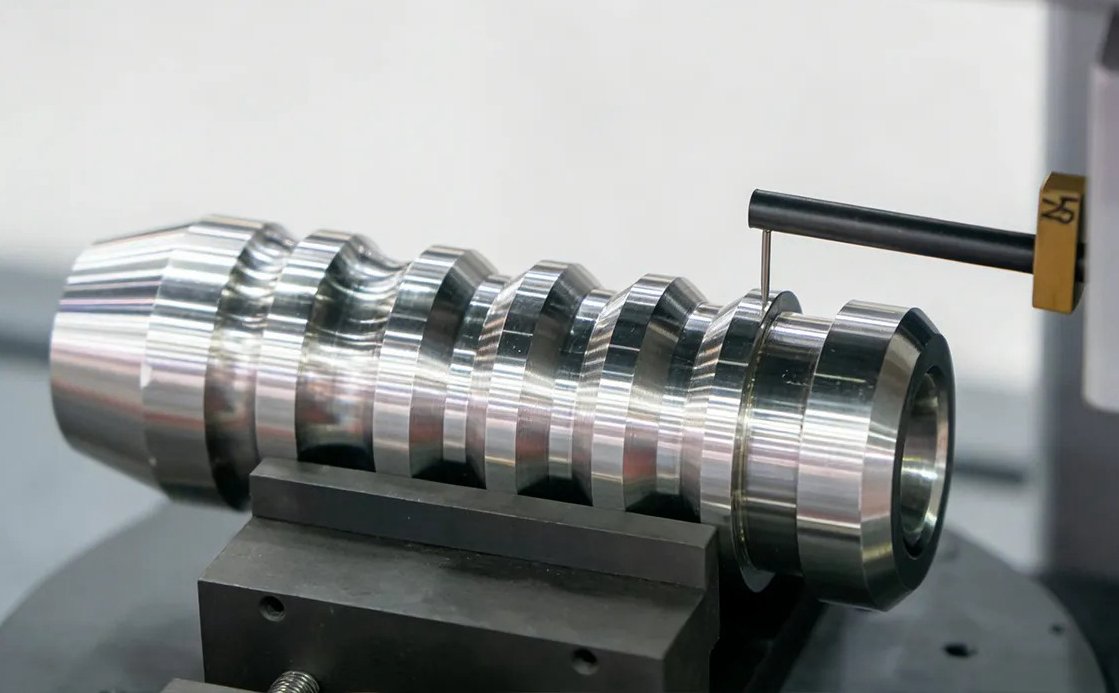
- Rt (Total Height): The vertical distance from the bottom of the deepest valley to the top of the highest peak in the sample.
Note: Rt is very process-dependent. These are approximate numbers for machining.
- Cut-off Length: The default sampling length that ISO/ASME standards require to measure “roughness” only.
1. Gold Standard: Ra 3.2 (N8) vs. Ra 0.8 (N6)
Ra 3.2 (125 µin): is the default standard for most CNC machined parts. If there are no smoothness requirements marked on your drawings, this level is usually achieved by default.
Ra 0.8 (32 µin): This level of roughness is considered precision machining and usually requires fine cutting parameters or grinding processes.
2. Quick Math
If you sometimes don’t have this table at hand, you can also do a quick mental calculation by using the following empirical formula:
µm to µin: Ra (µm)×40≈Ra (µin)
µin to µm: Ra (µin)÷40≈Ra (µm)
CNC Machining Processes & Typical Roughness Ranges
Many times, there are specific surface roughness targets on the drawings, and this table will help you better select the appropriate machining process.
| Manufacturing Process | Typical Ra Range (µm) | Typical Ra Range (µin) | Cost Impact |
|---|---|---|---|
| Flame Cutting | 12.5 – 25.0 | 500 – 1000 | Low |
| Sawing | 6.3 – 25.0 | 250 – 1000 | Low |
| Drilling | 3.2 – 12.5 | 125 – 500 | Low |
| Milling (Rough) | 3.2 – 12.5 | 125 – 500 | Low-Med |
| Milling (Finish) | 0.8 – 3.2 | 32 – 125 | Medium |
| Turning (Rough) | 3.2 – 12.5 | 125 – 500 | Low-Med |
| Turning (Finish) | 0.4 – 3.2 | 16 – 125 | Medium |
| Reaming | 0.8 – 3.2 | 32 – 125 | Medium |
| Surface Grinding | 0.2 – 1.6 | 8 – 63 | High |
| Honing | 0.1 – 0.8 | 4 – 32 | High |
| Lapping / Polishing | 0.025 – 0.2 | 1 – 8 | Very High |
Common Surface Finishes & Roughness Compatibility
In actual production, surface treatment is generally required after parts are processed. This comparison table on the relationship between post-processing and roughness will show you detailed data.
| Finish Type | Typical Ra (µm) | Typical Ra (µin) | Effect on Surface | Visual Appearance |
|---|---|---|---|---|
| As Machined | 3.2 | 125 | Baseline | Visible tool marks, consistent texture. |
| Smooth Machined | 0.8 – 1.6 | 32 – 63 | Baseline | Minimal tool marks, smooth to touch. |
| Bead Blasted | 1.6 – 6.3 | 63 – 250 | Increases Ra | Matte, non-reflective, uniform “grainy” look. |
| Brushed | 0.8 – 6.3 | 32 – 250 | Directional | Fine parallel lines, satin finish. |
| Vapor Polished | 0.4 – 0.8 | 16 – 32 | Reduces Ra | Glossy, transparent (primarily for plastics). |
| Electropolished | 0.2 – 0.8 | 8 – 32 | Reduces Ra | Bright, microscopically smooth, deburred. |
| Mechanical Polish | 0.05 – 0.4 | 2 – 16 | Reduces Ra | Mirror-like, high reflectivity. |
| Anodized (Type II) | Maintains | Maintains | No Major Change | Changes color, retains original texture. |
| Powder Coated | N/A | N/A | Masks Surface | Thick coating hides original machining marks. |
Notes:
1. The Bead Blast Trap
Many people must think that the sandblasting process can make parts smooth. sandblasting usually increases the Ra value because it creates numerous tiny pits on the surface of the part. The part looks smooth, but the directional knife lines on its surface are eliminated, forming a uniform diffuse reflection.
2. Anodizing Pre-req
Many parts choose to use anodizing process. But in fact, anodizing does not cover up the surface imperfections. If you anodize a surface with Ra 3.2 roughness, you will get a colored Ra 3.2 surface with tool marks that are still clearly visible. So if you want a beautiful anodized effect, you usually need to blast or polish the part first.
ISO Surface Roughness Comparison Chart
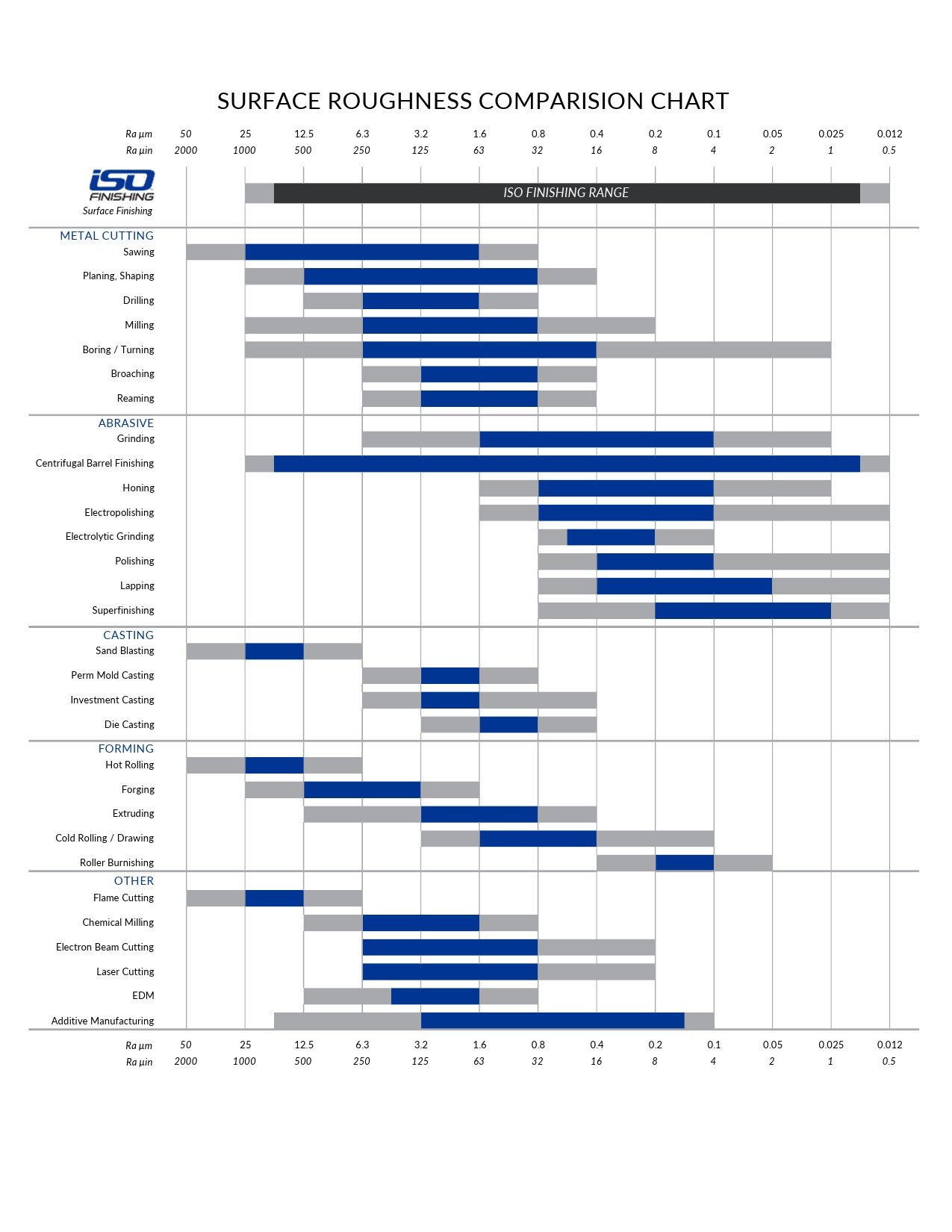
The CNC Surface Finish Chart: A Visual Guide
Surface finish chart, also called surface roughness chart, includes information like standard grades, finish description, common process, and other characteristics for various Ra values. This chart helps engineers and operators to decide the desired finishing level in machining projects.
| Ra (μm) | Ra (μin) | N-Grade | Finish Description | Visual Look | Common Process | Where It’s Used | Cost |
| 3.2 | 125 | N8 | Standard Machining | Visible tool marks | Rough Milling/Turning | General-purpose parts | Low ($) |
| 1.6 | 63 | N7 | Fine Machining | Slightly smoother | Standard Milling | Structural components | Low ($) |
| 0.8 | 32 | N6 | Smooth | Smooth to the eye | Finishing Pass | Moving parts, enclosures | Moderate ($$) |
| 0.4 | 16 | N5 | Very Smooth | Glossy surface | Precision Grinding | Sealing surfaces, bearings | Moderate ($$) |
| 0.2 | 8 | N4 | Super Smooth | Highly glossy | Fine Lapping | Aerospace parts, hydraulics | High ($$$) |
| 0.1 | 4 | N3 | Mirror-Like | Mirror reflection | Polishing | Optical and medical components | Very High ($$$$) |
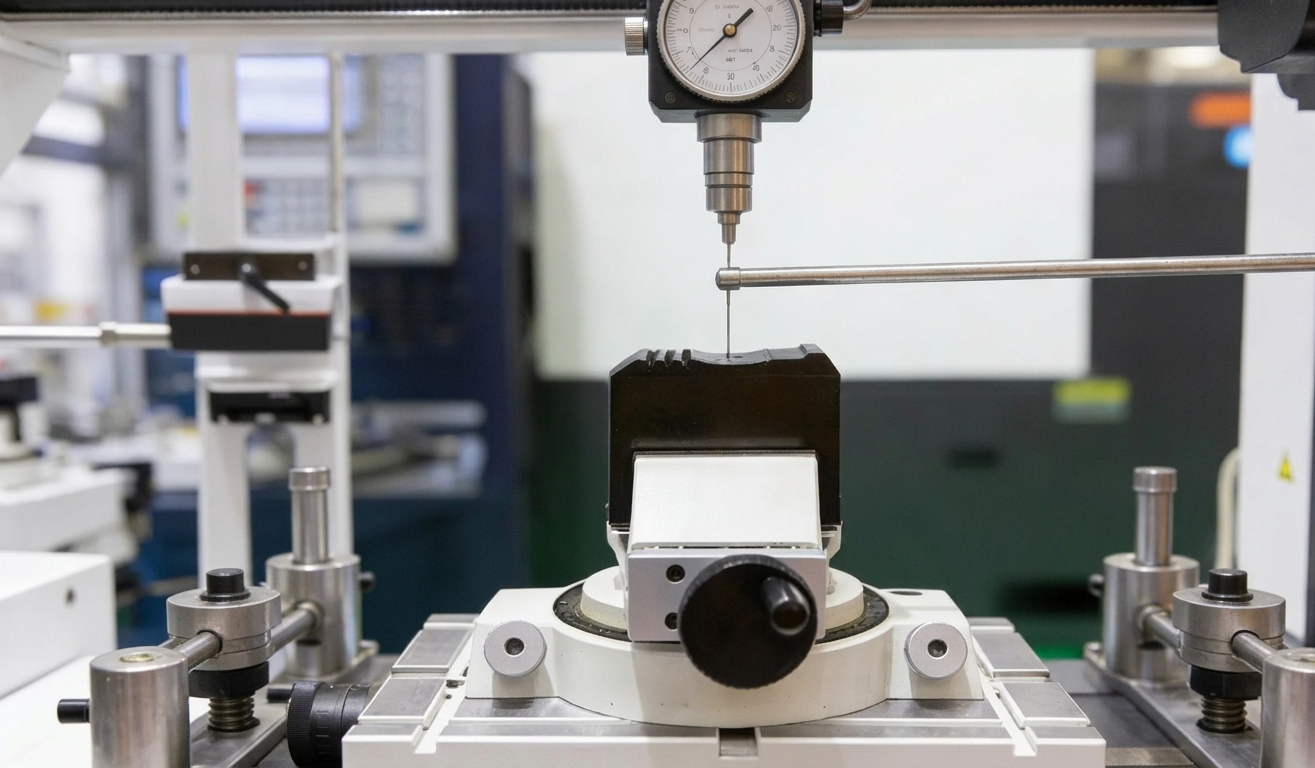
Different Types of CNC Surface Finishes
It is most important to understand the CNC surface finish types while choosing the right one. You have to know that some finishes are all about visuals, but some boost functions. Let us talk about more common types of CNC surface finishes so that you can make the right decision for your component.
As Machined
The surface finish is attained straight from the machine. However, no form of additional treatment is applied.
- Effect: This surface is not very smooth and will have visible tool marks. For parts that have a neat appearance, this finish is definitely not ideal.
- Application: Generally, this finish is best suitable for internal components, prototypes, or parts that will not be visible.
Bead Blasting
As with other types of blasting, this process utilizes small glass or ceramic beads to finish.
- Effect: It softens, refines, and enhances the overall portion of the item utilizing different shades of liquid colouring.
- Application: Typically, the soft, liquid-colouring surfaces where a gentle finish with visible parts is required are best for this process.
Anodizing
Anodizing is done to further enhance the part finish; it provides protective anodic layers prepared through an electrochemical process.
- Effect: A passive layer with varying shades and finishes of lustre is achieved along with corrosion strengthening.
- Application: Keep in mind that the products and parts used in the field, electronics, and outdoor products are suited to this process.
Powder Coating
Most importantly, it is the technique of applying the dry form of powder and using the technique of baking that helps to achieve an even layer of coating.
- Effect: This technique helps in creating an even and multi-layered coating along with a multi-hued finish with improved resistance to corrosion damage and oxidation.
- Application: Generally, it is suggested for handles, machine parts, and even frames made of metals.
Polishing
This process boosts the layering of different types of materials, which provides the smoothing out of surfaces.
- Effect: It helps to achieve an ideal finish for aesthetics with a fully smooth surface with multiple layers of reflection.
- Application: Significantly, it is recommended for items of ornament, medical devices, and other instruments and devices of a polished grade.
Electropolishing
Lastly, electropolishing is a smoother superficial touch achieved through the use of electricity, which removes layers of the structure.
- Effect: It provides a uniform and highly clean finish by smoothing the micro peaks and valleys that are present.
- Application: Generally, it is utilized for parts that are considered medical, equipment graded as food, and constituents made from stainless steel.
To put it simply, you should ensure that a finish is compatible with your part, and you’re all set. For further help, a CNC surface finish chart will help you make the right decision.
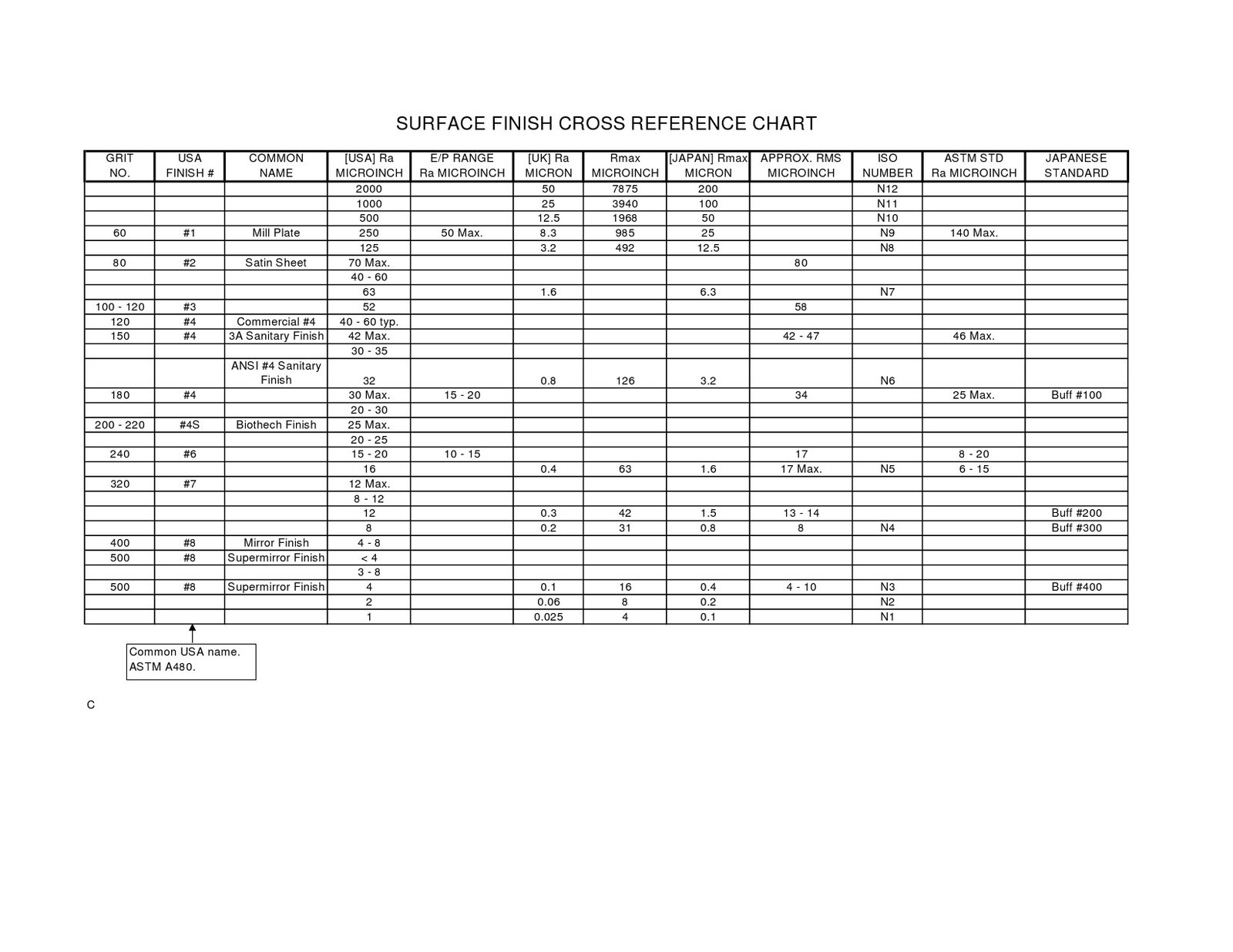
Surface Finish Cross Reference Chart
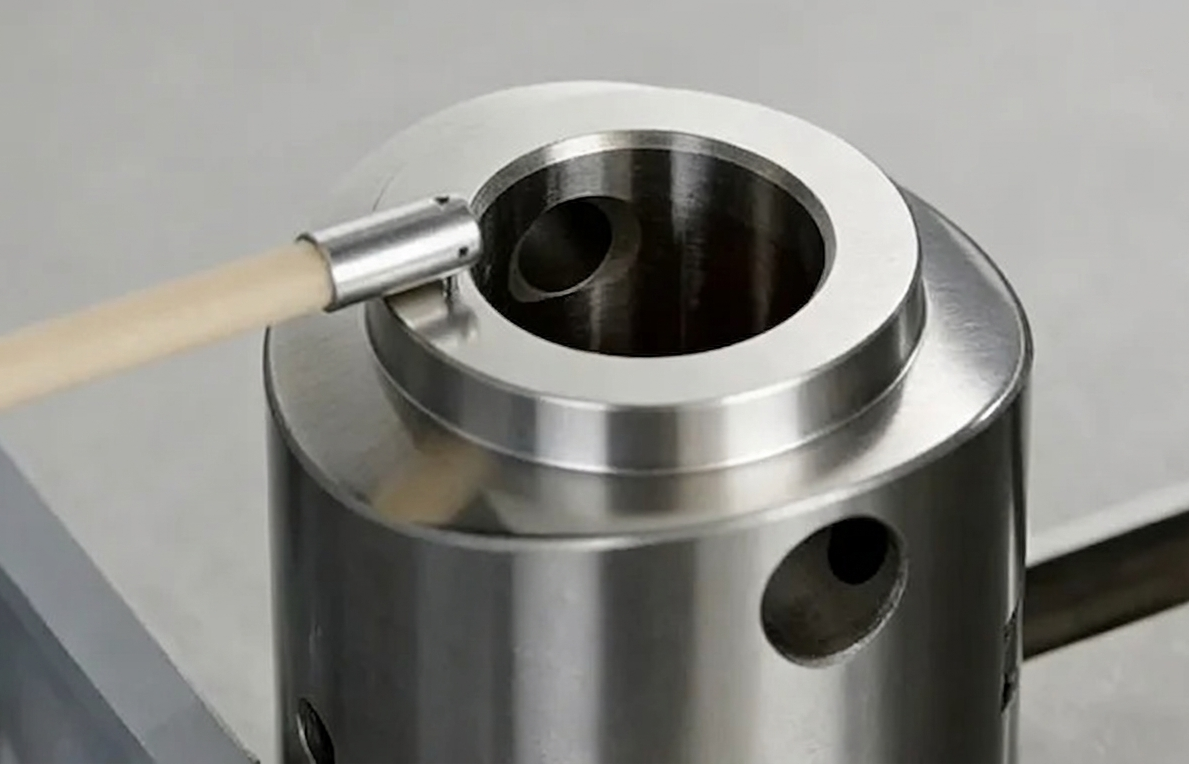
Wrapping Up
Thus, it is concluded from the above discussion that the surface finish understanding relates to better control over product performance and appearance. With the understanding of different types of CNC surface finishes, you can make the right decision when selecting them.
You know the finish enhances quality while ensuring your parts function as designed. Thus, you should always consider material, function, cost, and the best CNC machining service provider like Milemetal. Yes, MILE Precision is a trusted service provided in the CNC machining world. You can contact Milemetal right now for a quote or further information.