HV,HB,HRC Hardness comparison table, How to modify the hardness on a workpiece?

5 Essential DFM Tips for CNC Machined Parts: Optimize Cost & Quality
2026-05-15
The required hardness of a workpiece could be defined by its functionality. If a harder or softer hardness on the workpiece is required, heat treatment will be helpful for modifying it specification. Typically, we are using some kinds of differnt heat treatment below to meet the requirements:
1.) quenching
The way to increase the hardness of workpiece made of carbon steel or alloy steel is general performed by quenching which is to heat the workpiece above its critical temperature and hold for a period of time. After that, the workpiece have to be rapidly cooling in the water, oil or air to complete the quenching process. In that way, quenching could increase the hardness but decrease the ductile of the workpiece.
2.) tempering
Tempering is used to increase the toughness of the tooling or spring made of carbon steel or alloy steel. For parts featuring with excess hardness or becoming too hard/brittle after quenching, a consequently tempering process could reduce the hardness and increase the ductile by heating the workpiece to a temperature below its critical point and then steadily cooling to a lower termperature
3.) anealing
Anealing is similar to tempering which is also capable of altering the properties of a workpiece to reduce its hardness and increase its ductile. Under a proper heating temperature, the freedom moving atoms of the metal workpiece could achieve a more equilibrium state. After the heating stage, the workpiece is usually left in the oven for steadily cooling while recrystallization and grain growth are happening. For parts made of carbon steel or alloy steel, if it is a terminal or connector spare part for crimping, a anealing heat treatment might be required.
4.) case hardening
There are a lots of heat treatment methods to partially harden the workpiece. Case hardening is capable of increasing the stiffness of the outer case of a carbon steel of alloy steel, and keep its core area soft as before for better ductile property. The hardened outer case of the workpiece can be much more durable and wear resistant. However, the hardened surface will be no longer suitable for machining. Therefore, case hardening is generally applied once the workpiece has been completed from CNC machining process.

Tensile Strength Rm 820-2180 [MPa]
| Tensile StrengthRm 820-2180[MPa] | Hardness Vickers[HV] | Hardness Brinell[HB] | Hardness Rockwell C[HRC] |
|---|---|---|---|
| 820 | 255 | 242 | 23,1 |
| 835 | 260 | 247 | 24 |
| 850 | 265 | 252 | 24,8 |
| 865 | 270 | 257 | 25,6 |
| 880 | 275 | 261 | 26,4 |
| 900 | 280 | 266 | 27,1 |
| 915 | 285 | 271 | 27,8 |
| 930 | 290 | 276 | 28,5 |
| 950 | 295 | 280 | 29,2 |
| 965 | 300 | 285 | 29,8 |
| 995 | 310 | 295 | 31 |
| 1030 | 320 | 304 | 32,2 |
| 1060 | 330 | 314 | 33,3 |
| 1095 | 340 | 323 | 34,4 |
| 1125 | 350 | 333 | 35,5 |
| 1155 | 360 | 342 | 36,6 |
| 1190 | 370 | 352 | 37,7 |
| 1220 | 380 | 361 | 38,8 |
| 1255 | 390 | 371 | 39,8 |
| 1290 | 400 | 380 | 40,8 |
| 1320 | 410 | 390 | 41,8 |
| 1350 | 420 | 399 | 42,7 |
| 1385 | 430 | 409 | 43,6 |
| 1420 | 440 | 418 | 44,5 |
| 1455 | 450 | 428 | 45,3 |
| 1485 | 460 | 437 | 46,1 |
| 1520 | 470 | 447 | 46,9 |
| 1555 | 480 | [456] | 47,7 |
| 1595 | 490 | [466] | 48,4 |
| 1630 | 500 | [475] | 49,1 |
| 1665 | 510 | [485] | 49,8 |
| 1700 | 520 | [494] | 50,5 |
| 1740 | 530 | [504] | 51,1 |
| 1775 | 540 | [513] | 51,7 |
| 1810 | 550 | [523] | 52,3 |
| 1845 | 560 | [532] | 53 |
| 1880 | 570 | [542] | 53,6 |
| 1920 | 580 | [551] | 54,1 |
| 1955 | 590 | [561] | 54,7 |
| 1995 | 600 | [570] | 55,2 |
| 2030 | 610 | [580] | 55,7 |
| 2070 | 620 | [589] | 56,3 |
| 2105 | 630 | [599] | 56,8 |
| 2145 | 640 | [608] | 57,3 |
| 2180 | 650 | [618] | 57,8 |
Vickers: F ≥ 98 N, diamond pyramid (HV)
Brinell: F = 29.421 N, ball ø 10 mm (HB)
Rockwell: F = 1,471 N, diamond cone (HRC)
Tensile Strength Rm 255-930 [MPa]
1 MPa = 1 N/mm²
| Tensile StrengthRm 255-930[MPa] | Hardness Vickers[HV] | Hardness Brinell[HB] | Hardness Rockwell B[HRB] |
|---|---|---|---|
| 255 | 80 | 76 | |
| 270 | 85 | 80,7 | 41 |
| 285 | 90 | 85,5 | 48 |
| 305 | 95 | 90,2 | 52 |
| 320 | 100 | 95 | 56,2 |
| 335 | 105 | 99,8 | |
| 350 | 110 | 105 | 62,3 |
| 370 | 115 | 109 | |
| 385 | 120 | 114 | 66,7 |
| 400 | 125 | 119 | |
| 415 | 130 | 124 | 71,2 |
| 430 | 135 | 128 | |
| 450 | 140 | 133 | 75 |
| 465 | 145 | 138 | |
| 480 | 150 | 143 | 78,7 |
| 495 | 155 | 147 | |
| 510 | 160 | 152 | 81,7 |
| 530 | 165 | 156 | |
| 545 | 170 | 162 | 85 |
| 560 | 175 | 166 | |
| 575 | 180 | 171 | 87,1 |
| 595 | 185 | 176 | |
| 610 | 190 | 181 | 89,5 |
| 625 | 195 | 185 | |
| 640 | 200 | 190 | 91,5 |
| 660 | 205 | 195 | 92,5 |
| 675 | 210 | 199 | 93,5 |
| 690 | 215 | 204 | 94 |
| 705 | 220 | 209 | 95 |
| 720 | 225 | 214 | 96 |
| 740 | 230 | 219 | 96,7 |
| 755 | 235 | 223 | |
| 770 | 240 | 228 | 98,1 |
| 785 | 245 | 233 | |
| 800 | 250 | 238 | 99,5 |
| 820 | 255 | 242 | |
| 835 | 260 | 247 | 101 |
| 850 | 265 | 252 | |
| 865 | 270 | 257 | 102 |
| 880 | 275 | 261 | |
| 900 | 280 | 266 | 104 |
| 915 | 285 | 271 | |
| 930 | 290 | 276 | 105 |
Vickers: F ≥ 98 N, diamond pyramid (HV)
Brinell: F = 29.421 N, ball ø 10 mm (HB)
Rockwell: F = 980 N, ball 1/16″ (HRB)
NINGBO MILE PRECISION MACHINERY CO.,LTD
MILE Precision Manufacturing is dedicated to producing top quality precision machined parts and products that meet or exceed our customers’ expectations. With in-house engineering assistance, a full range of secondary services, and the capabilities to provide prototypes and short- and long-run production, we are your one-stop shop for precision CNC machining. Contact us today to get started on your project.
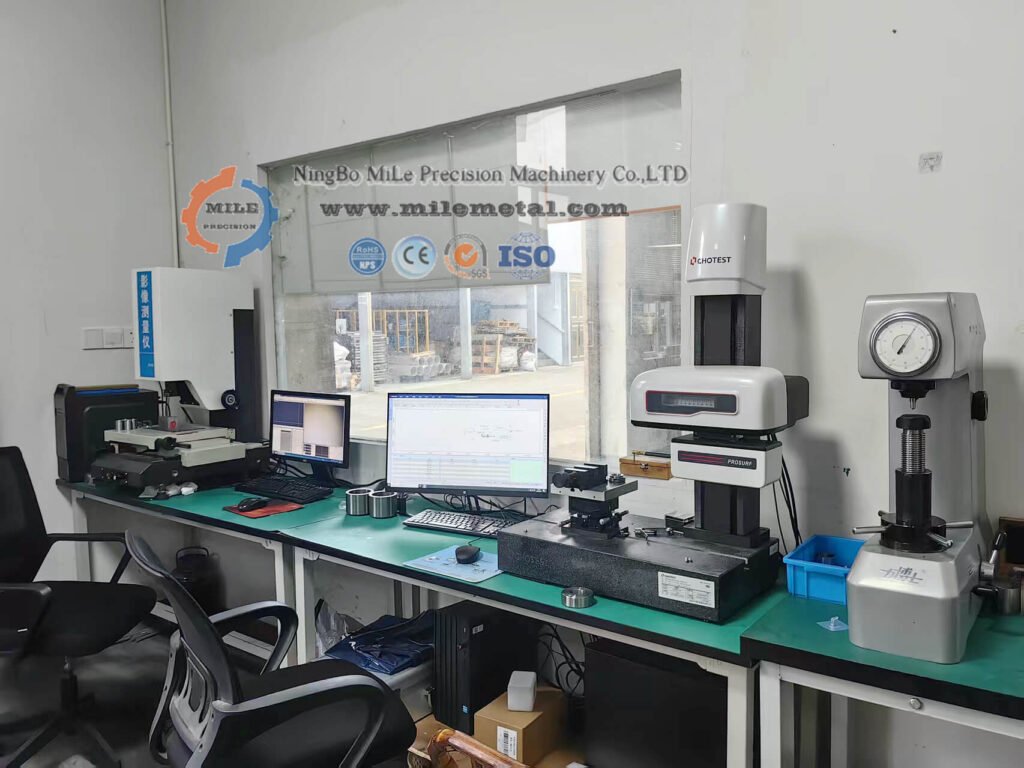
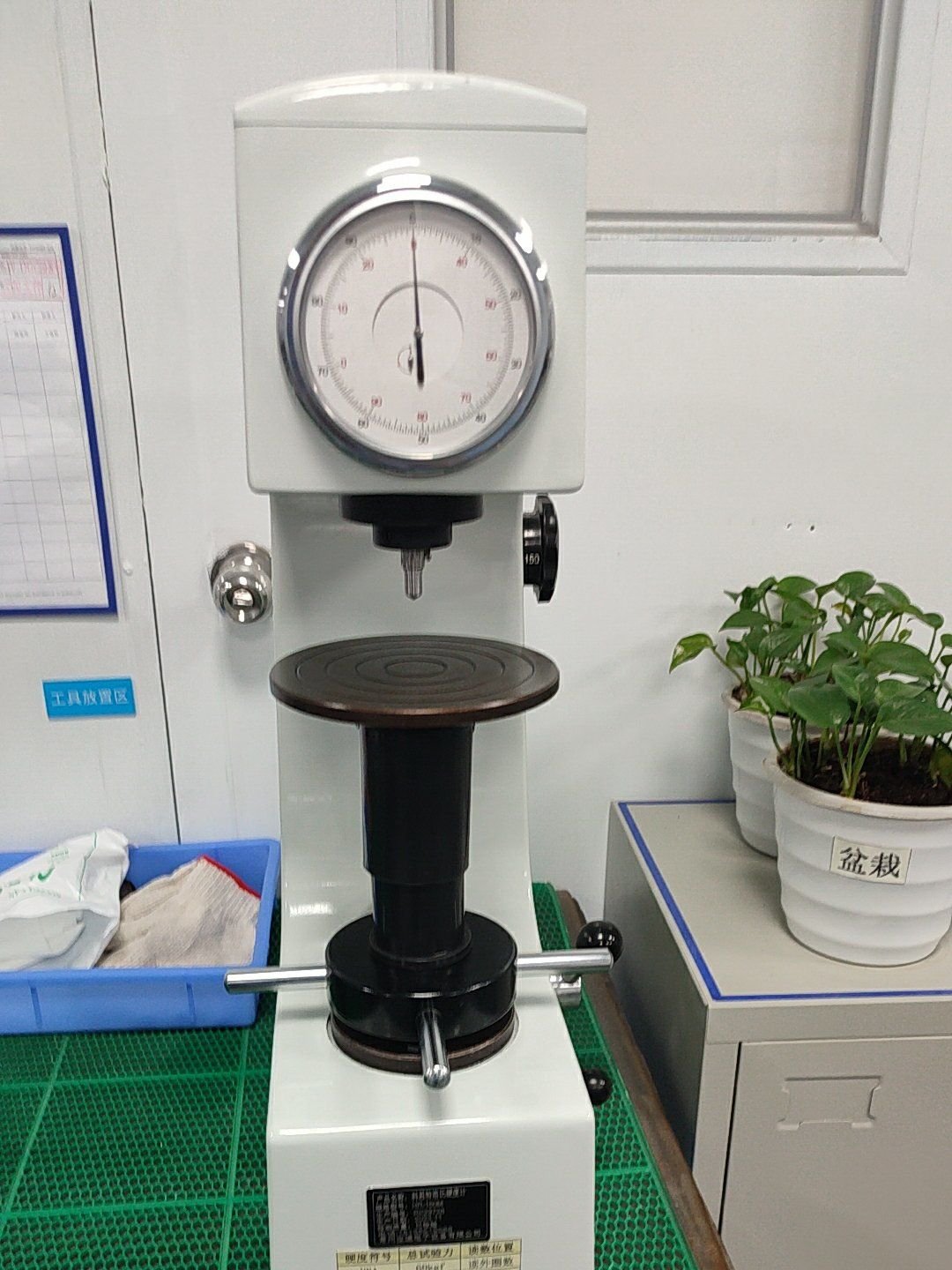
Hardness test according to Vickers
On metallic materials from very low to very high hardness, the Vickers hardness test is applicable. This hardness test is particularly suitable for very small and very hard samples.
Hardness test according to Rockwell
If the hardness of the metallic materials is within the following ranges, the Rockwell hardness test is applicable:
HRB: 20 bis 100HRB
HRF: 60 bis 100HRF
HRC: 20 bis 70HRC
HRA: 20 bis 88HRA
HRD: 40 bis 77HRD
HR15N: 70 bis 94HR15N
HR20N: 42 bis 86HR30N
HR45N: 20 bis 77HR45N
Hardness test according to Brinell
The hardness test according to Brinell is for metallic materials with the steel ball is determined as indenter only up to 450HB, the overlying hardness values were determined with the hard metal ball.